



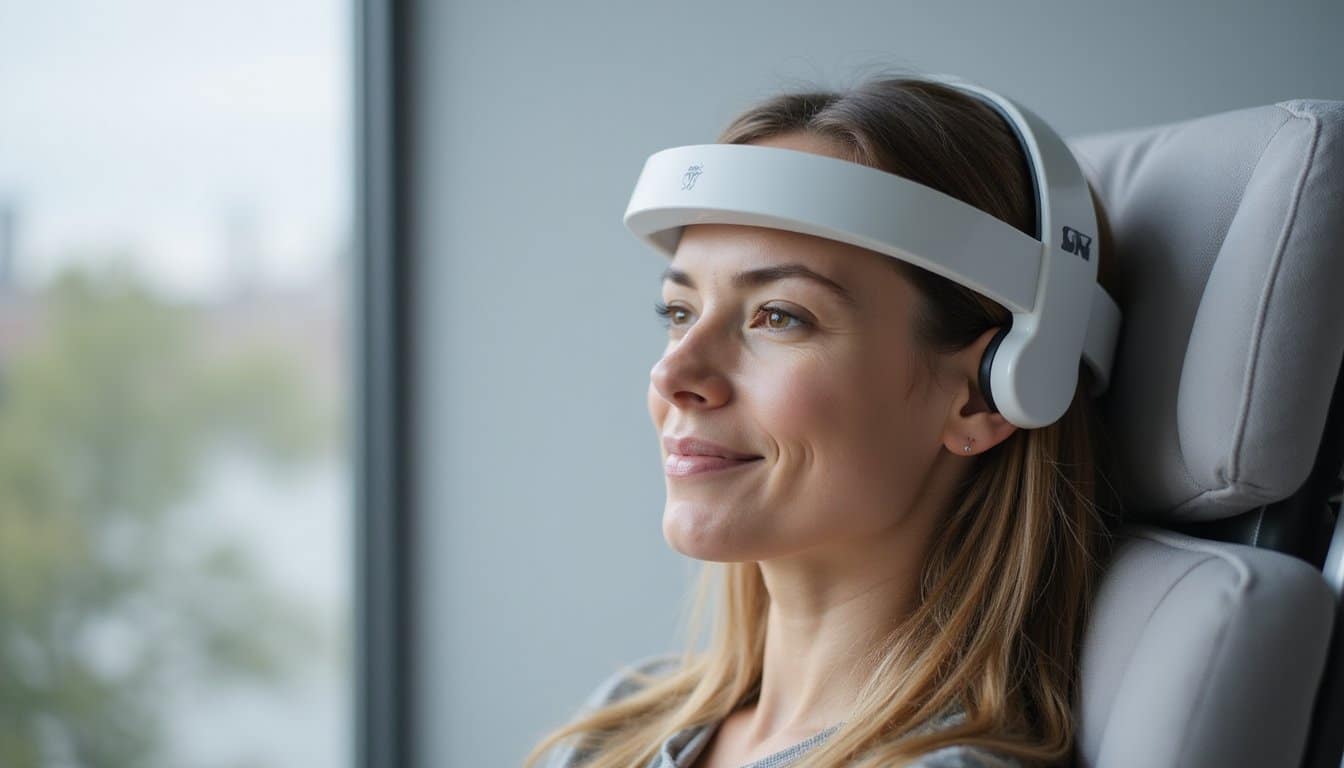
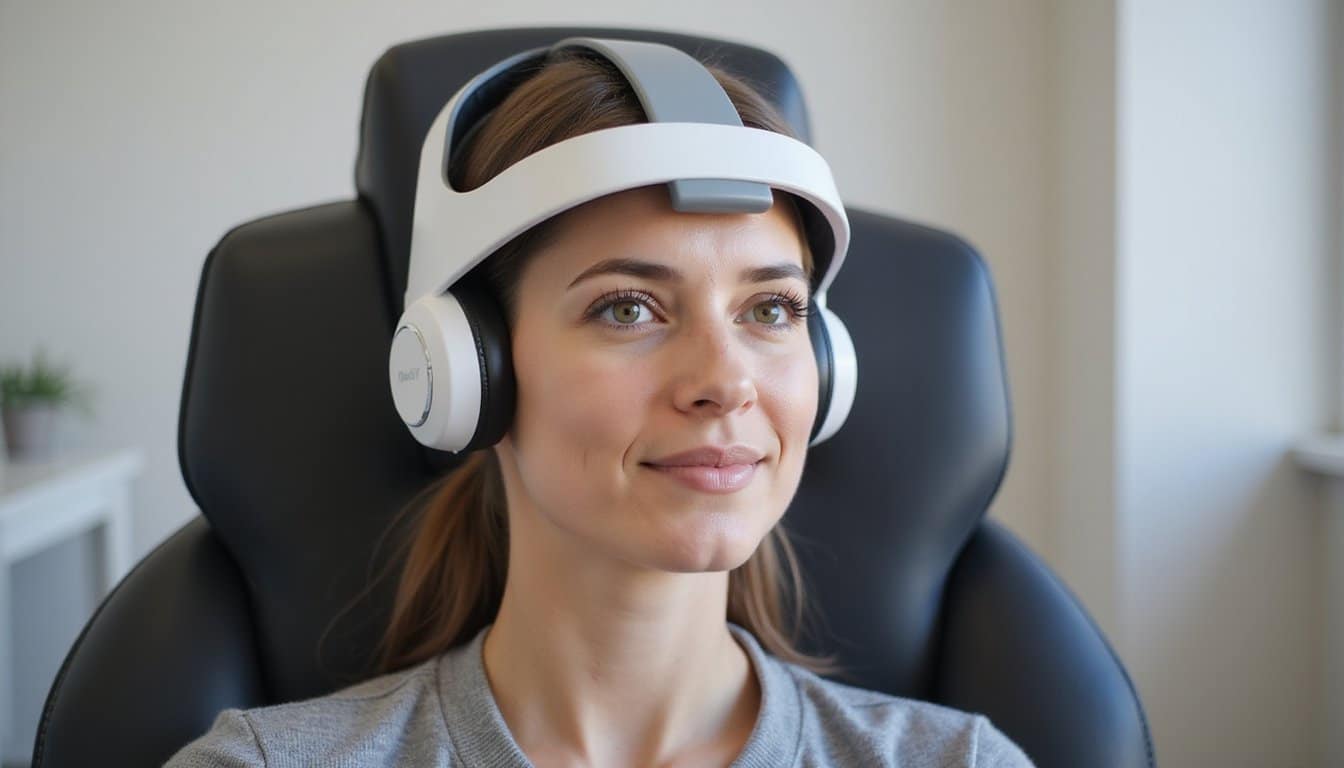
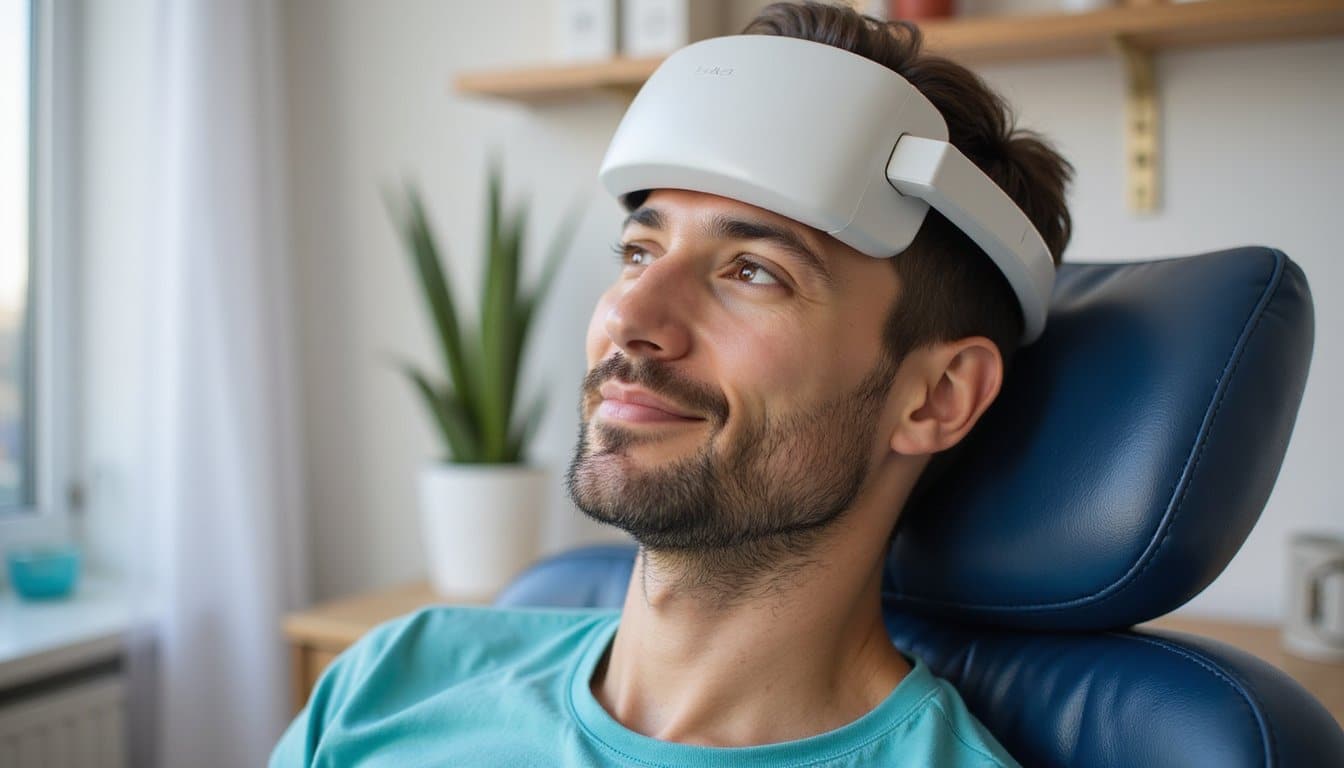
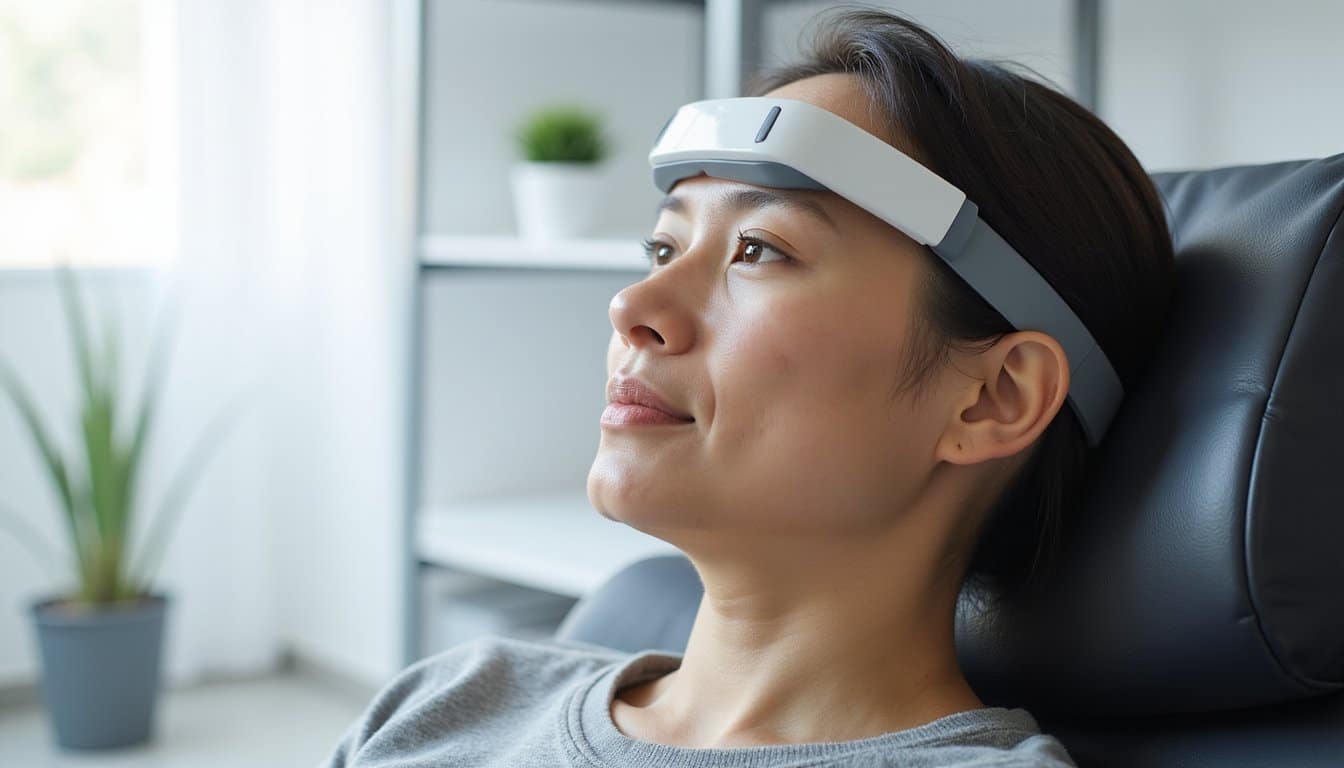
TMS therapy is a noninvasive procedure that delivers magnetic pulses through a coil placed against your scalp, inducing electrical currents in neurons within the dorsolateral prefrontal cortex, a key region for mood regulation. You’ll stay fully awake with no anesthesia required, and sessions last between 3 and 40 minutes. It’s FDA-cleared for major depressive disorder, OCD, migraines, and smoking cessation. Below, you’ll find everything you need to know about its effectiveness, safety, and what to expect.
What Is TMS Therapy?

Transcranial magnetic stimulation (TMS) is a noninvasive medical procedure that uses magnetic pulses to stimulate nerve cells in targeted brain regions. During each session, an electromagnetic coil placed against your scalp delivers brief pulses that pass through the skull to reach underactive neural circuits. You remain fully awake with no anesthesia or sedation required.
As a form of non-invasive brain stimulation, TMS directly targets the brain areas involved in mood regulation rather than working systemically like medication. This makes it an effective drug-free depression treatment, particularly when antidepressants or therapy haven’t provided adequate relief. The FDA has cleared TMS for major depressive disorder, OCD, migraines, and smoking cessation. Treatment typically involves 30 to 36 office-based sessions over several weeks. Ongoing research continues to explore ways to enhance TMS effectiveness and expand its application to additional conditions.
How TMS Therapy Works
Understanding what TMS is naturally raises the question of how it produces its therapeutic effects. A computer-controlled coil placed on your scalp generates magnetic pulses that pass through the skull without incision. These pulses induce small electrical currents in underlying neurons, altering their firing patterns, a process called neurostimulation.
Depression protocols typically target your dorsolateral prefrontal cortex, a region linked to mood regulation and executive control. When this area is underactive, depressive symptoms can intensify. Understanding how TMS works clarifies why it’s effective: repeated stimulation changes how efficiently neurons in these circuits communicate, gradually normalizing activity across mood-related networks. Sessions last roughly 3 to 30 minutes, delivered five days a week for four to six weeks. This cumulative approach helps reset dysfunctional brain patterns driving your symptoms. The magnetic fields penetrate 2-3 centimeters into the brain, activating cells that then release neurotransmitters essential for mood improvement.
Conditions TMS Therapy Can Treat

TMS therapy holds FDA clearance for treating major depressive disorder, including treatment-resistant cases unresponsive to antidepressants, by directly stimulating underactive prefrontal cortex regions involved in mood regulation. It’s also FDA-cleared for OCD using deep TMS protocols that target cortico-striato-thalamo-cortical circuits, and for migraine with aura via single-pulse devices that modulate cortical excitability. Additionally, you can explore TMS as an evidence-based option for smoking cessation, where deep TMS courses target the bilateral insula and prefrontal regions linked to addiction pathways. Beyond these cleared uses, rTMS shows encouraging results in neurorehabilitation for conditions like Parkinson’s disease, where stimulation can enhance activity in motor regions and help alleviate dopamine deficiency.
Treatment-Resistant Depression
When standard antidepressants fail to relieve symptoms after at least two adequate trials, clinicians classify the condition as treatment-resistant depression (TRD). TMS targets your dorsolateral prefrontal cortex with magnetic pulses, stimulating underactive mood-regulating circuits directly. As an FDA cleared outpatient procedure, it bypasses systemic side effects common with pharmacotherapy.
Clinical data demonstrate meaningful outcomes for TRD:
- Response rates reach approximately 63, 67%, with full remission occurring in 37, 42% of patients who haven’t improved with multiple antidepressants.
- More than half of responders maintain remission at six-month follow-up after standard protocols.
- Accelerated protocols like SAINT report 80, 90% remission, compressing treatment into days rather than weeks.
Standard protocols typically require 30, 36 sessions over four to six weeks.
OCD and Migraines
For migraines, TMS modulates brain activity along headache pathways using magnetic pulses delivered through a head-mounted coil. Sessions run 3 to 30 minutes in an outpatient setting, offering you a drug-free, noninvasive alternative to medication-only management.
Smoking Cessation Support
Beyond neurological conditions like migraines, TMS also targets addiction pathways, most notably in smoking cessation. The FDA cleared Deep TMS with an H-coil in 2020 for short-term smoking cessation in adults. Electromagnetic pulses stimulate your prefrontal cortex and bilateral insula, modulating neural circuits governing reward, craving, and withdrawal.
A standard protocol includes 18 sessions over six weeks, combining daily and weekly phases. Key outcomes from clinical research include:
- Over 25% of pack-a-day smokers achieved a four-week continuous quit rate after treatment.
- 33% abstinence at six months was demonstrated in a multisite sustained-abstinence study.
- Longer treatment duration increased abstinence odds seven- to eight-fold, while higher intensity doubled them.
If you’ve failed previous quit attempts, TMS offers a drug-free, outpatient alternative worth considering.
What to Expect During a TMS Session
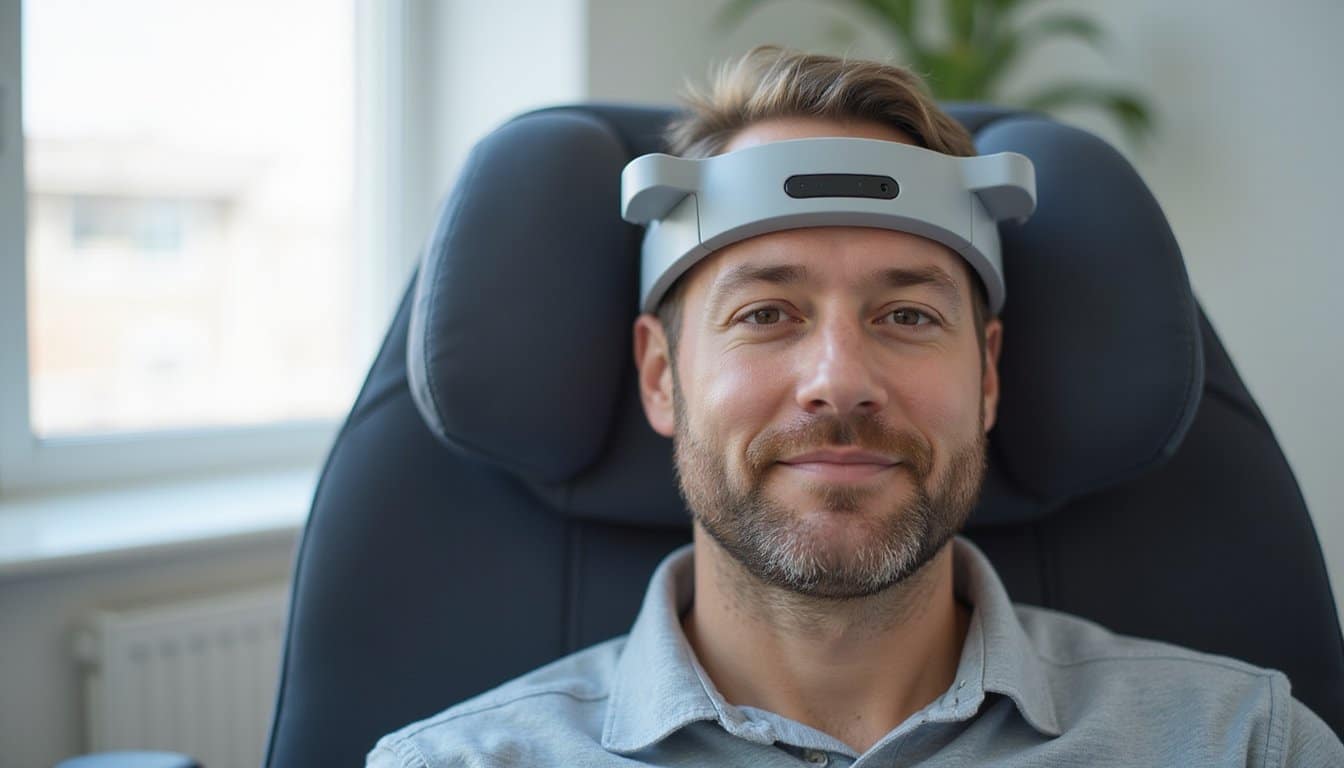
During your first visit, your provider performs motor threshold mapping to locate the precise stimulation site and calibrate pulse intensity, which makes this session longer than subsequent ones. A small magnetic coil is then positioned near your scalp to deliver targeted pulses to underactive brain regions. Standard protocols typically run five days per week for four to six weeks, with each session lasting approximately 19 to 37 minutes depending on the device and treatment settings.
Session Length and Schedule
Most standard rTMS sessions last 20 to 40 minutes, though newer theta-burst protocols can deliver a full treatment in as little as 3 minutes. Deep TMS sessions typically run about 20 minutes. You’ll remain seated throughout, and you can resume normal activities immediately afterward.
A standard treatment course follows this general structure:
- Acute phase: 5 sessions per week over 4 to 6 weeks, totaling 20 to 36 sessions depending on your protocol and symptom severity.
- Continuation phase: Some protocols add 8 to 12 weeks of tapering sessions to consolidate gains.
- Accelerated option: Condensed protocols compress treatment into 1 to 2 weeks using multiple daily sessions, which research suggests maintains comparable efficacy.
Your clinician will adjust session frequency and total count based on your individual response trajectory.
Coil Placement Process
Because the magnetic field drops off rapidly with distance from the coil, precise placement directly determines whether the intended cortical target receives adequate stimulation. Your clinician first locates your motor cortex by delivering single pulses and observing motor-evoked potentials, establishing a reproducible anatomical reference point. From there, the target, often the left dorsolateral prefrontal cortex, is identified using scalp-based measurements, the 10, 20 EEG system, or MRI-guided neuronavigation for greater precision.
Coil orientation matters as much as position. Misalignment can shift the induced electric field away from the target, reducing therapeutic efficacy. Your technician adjusts both angle and contact pressure, then programs the pulse waveform. You’ll feel a tapping sensation on your scalp. If discomfort or facial twitching occurs, your provider can refine placement and settings across subsequent sessions.
How Effective Is TMS for Depression?
How well does TMS actually work? Research shows strong outcomes, particularly if you haven’t responded to antidepressants.
- Response rates: Approximately 50, 60% of patients with treatment-resistant depression experience clinically meaningful improvement, three times higher than sham controls.
- Remission rates: Roughly 30% of TMS patients achieve full symptom remission. When combined with psychotherapy, that figure rises to 56%.
- Accelerated protocols: The SAINT protocol achieves 78.6% remission in severe depression within five days, with effects lasting several months.
You’re five times more likely to reach remission with TMS than with sham treatment. More than half of responders maintain remission at six-month follow-up. Side effects remain minimal, typically temporary headaches or fatigue. Contact Villa Wellness Center to determine whether TMS fits your treatment profile.
How TMS Differs From ECT
Though both TMS and ECT treat depression, they differ fundamentally in mechanism, intensity, and clinical setting.
- Mechanism: TMS delivers electromagnetic pulses through a scalp-positioned coil to modulate neural activity in the dorsolateral prefrontal cortex. ECT applies electrical currents to induce a generalized therapeutic seizure affecting the brain broadly.
- Anesthesia and setting: You remain fully awake during TMS in an outpatient office. ECT requires general anesthesia, seizure monitoring, and a controlled medical environment.
- Efficacy and indication: PubMed evidence shows ECT produces greater short-term antidepressant response and larger reductions in suicidal behavior scores than rTMS. ECT is typically reserved for severe, urgent cases, including psychotic depression or high suicide risk, while TMS suits moderate to severe treatment-resistant depression.
Call Today and Explore Advanced Treatment Options
If you’re looking for effective care beyond traditional medication or talk therapy, modern treatment can make a powerful difference. At Villa Wellness Center in Sicklerville, NJ, our caring professionals deliver dependable TMS Therapy designed to support every step of your healing. Call +1 (844) 609-3035 today and begin a healthier chapter in your life.
Frequently Asked Questions
How Long Do the Results of TMS Therapy Typically Last?
You can typically expect TMS benefits to last 6, 12 months after completing treatment. Studies show about 46, 62.5% of responders maintain improvement at one year without additional sessions. If symptoms begin returning, booster sessions can restore your gains, 86% of monitored patients maintained remission with timely retreatment. Pairing TMS with ongoing therapy or medication can further extend your results. Contact Villa Wellness Center to discuss a maintenance plan tailored to you.
Does Insurance Cover TMS Therapy Treatments?
Most insurance plans cover TMS therapy when you meet medical necessity criteria. You’ll typically need a qualifying diagnosis, usually major depressive disorder, and documented failure of at least two antidepressants and psychotherapy. Your insurer will likely require prior authorization before you begin. Medicare may cover approximately 80% of approved costs after your deductible. Coverage varies by carrier, plan type, and diagnosis, so contact Villa Wellness Center to verify your specific benefits.
Can TMS Therapy Be Combined With Antidepressants or Talk Therapy?
Yes, you can combine TMS with antidepressants and talk therapy. Clinicians commonly pair TMS with medication, especially when you haven’t responded adequately to antidepressants alone. TMS targets underactive prefrontal regions directly, while therapy addresses thought patterns and coping skills, they work through different mechanisms. Since TMS doesn’t cause systemic side effects like medications do, it integrates smoothly into a broader treatment plan. Your prescribing clinician will individualize the approach.
Who Is Not a Good Candidate for TMS Therapy?
You’re not a good candidate for TMS if you have non-removable metal implants near your head, active seizure disorders, or unstable psychiatric conditions like uncontrolled psychosis. Pregnancy and breastfeeding also warrant caution due to limited research. Active substance abuse requires stabilization first, and conditions like brain tumors or increased intracranial pressure need individualized evaluation. Contact Villa Wellness Center to determine whether TMS is right for you.
How Soon After Starting TMS Do Patients Notice Improvement?
Most patients begin noticing improvements within 2 to 4 weeks of starting TMS. You’ll likely experience subtle early signs, better sleep, more energy, or small mood lifts, before fuller relief sets in. More pronounced changes typically appear around weeks 4 to 6 as the cumulative stimulation reshapes neural activity in targeted cortical regions. If you don’t feel immediate results, that’s normal; TMS builds session by session gradually.