







Yes, TMS therapy really works. In controlled trials, active TMS achieves response rates 2.25 times higher than sham stimulation, with nearly 40% of patients responding compared to just over 10% receiving placebo. You’ll typically see clinical response rates between 50% and 60%, with remission rates around 30% to 40% after a full treatment course. Your individual results depend on several key factors worth understanding below.
What Is TMS Therapy and How Does It Work?
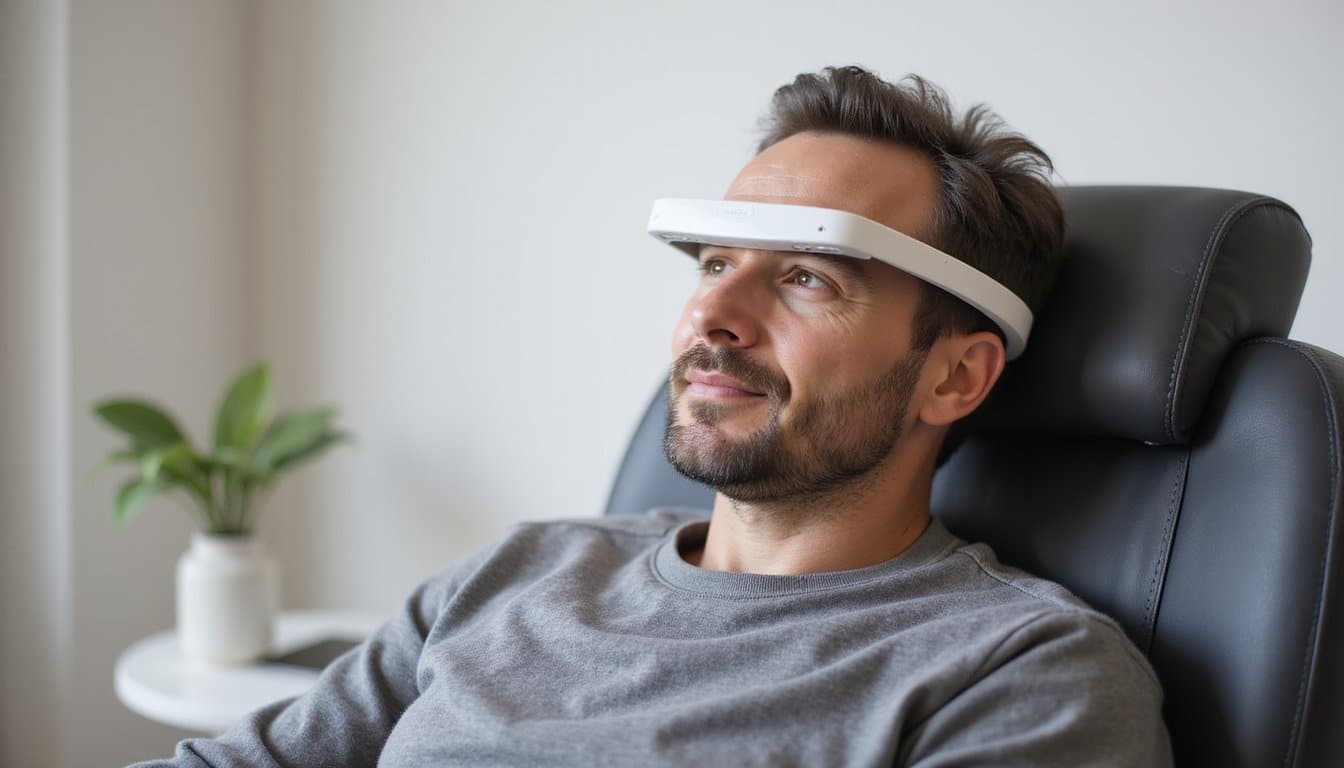
TMS, Transcranial Magnetic Stimulation, is a noninvasive, FDA-approved procedure that uses focused magnetic pulses to stimulate nerve cells in the brain. An electromagnetic coil placed against your scalp delivers targeted pulses that penetrate the skull, inducing small electrical currents in neurons within the dorsolateral prefrontal cortex, a region often underactive in depression.
So does TMS work? The mechanism is direct: repeated pulses reset dysfunctional neural communication patterns, gradually normalizing activity in mood-regulating circuits. You don’t need anesthesia or surgery, and sessions typically last 20 to 30 minutes.
Standard protocols involve five sessions per week over six weeks. Each session builds on the last, progressively modifying neural pathways through sustained neuromodulation. TMS doesn’t cause seizures or memory loss, and most patients tolerate it with only mild side effects. The most commonly reported side effect is mild headaches, which are usually temporary and can be managed with over-the-counter medications.
Does TMS Therapy Work Better Than Placebo?
When evaluating any medical treatment, the critical question isn’t whether patients improve, it’s whether they improve more than placebo. The data on tms effectiveness answers clearly: yes.
Meta-analyses show active rTMS produces response rates roughly 2.25 times higher than sham stimulation, with remission rates 2.78 times greater. In absolute terms, active treatment achieves nearly 40% response versus just over 10% with sham.
Placebo response in TMS trials is substantial, and it’s growing yearly. However, this doesn’t undermine the treatment signal. Active and placebo effects rise in parallel (r = 0.738, P < 0.001), preserving a consistent superiority gap across decades of research. The relative advantage remains time-independent regardless of sham method or assessment scale. You’re seeing real neurological change, not expectation alone. These findings align with broader research showing that 50, 60% of treatment-resistant patients experience significant symptom improvement with TMS therapy.
What Are the Response Rates for TMS Therapy?
When you look at clinical trial data, TMS response rates for depression typically fall in the 50%, 60% range, with remission rates around 30%, 40% after a full treatment course. Real-world outcomes can vary, with some naturalistic studies reporting response rates closer to 37%, 38% in more treatment-resistant populations. Understanding the difference between controlled trial results and clinical practice outcomes helps you set realistic expectations for your own treatment. Some treatment centers report that 70% to 80% of patients experience significant symptom relief, suggesting that individual results may depend heavily on the specific clinical setting and patient selection criteria.
Clinical Trial Results
| Metric | Active rTMS | Sham |
|---|---|---|
| Response Rate | 39.68% | 13.71% |
| Remission Rate | 36% | 8% |
| Responders/Total | 200/504 | 48/350 |
| NNT (Response) | 6.1 | , |
| NNT (Remission) | 5.4 | , |
Deep TMS protocols report even stronger outcomes, 82% response and 65% remission after 30 sessions. You’ll notice that stimulation method, session count, and prior treatment history all influence your individual results.
Real-World Response Rates
Clinical trials set the benchmark, but real-world data from everyday practice paint a broader picture of what you can expect. Response rates for TMS in treatment-resistant depression commonly fall between 50% and 60%, with remission around 30% to 40%. Some clinic datasets report even higher figures, though outcomes vary by population and protocol.
Your results depend on several factors: severity, medication history, comorbidities, and treatment adherence. If you’ve failed multiple antidepressants, evidence-based data still show meaningful benefit, roughly 30% response in harder-to-treat cases. Deep TMS protocols sometimes yield higher remission rates, with approximately one-third achieving remission even after failing three or more medications.
Response means significant symptom reduction; remission means you no longer meet criteria for major depressive disorder. Both represent clinically meaningful outcomes.
How Long Do TMS Therapy Results Last?
How long TMS results last depends on your initial response, the condition treated, and whether you pursue maintenance care. Published follow-up data confirm TMS is legit in producing durable neurological change, relief commonly persists months to over a year post-treatment.
| Timepoint | Responders Maintaining Benefit | Key Consideration |
|---|---|---|
| 3 months | ~67% | Strong early durability |
| 6 months | ~53% | Gradual attrition without boosters |
| 12 months | ~46, 50% | Maintenance care improves retention |
If symptoms return, booster sessions can restore improvement in approximately 84% of cases. You’ll achieve the strongest long-term outcomes by combining your acute TMS course with ongoing support, whether that’s maintenance sessions, therapy, or medication management.
Why Do TMS Therapy Results Vary So Much?
Not everyone responds to TMS the same way, and understanding why helps set realistic expectations. Your diagnosis, symptom severity, illness duration, and brain physiology all influence outcomes. In treatment-resistant depression, roughly 50% to 60% of patients respond, while about 30% achieve remission, meaningful numbers, but not uniform ones.
Protocol variables matter too. The brain region targeted, stimulation intensity, session frequency, and total treatment count each shape your results. Your motor threshold, the baseline measure used to calibrate pulse strength, can fluctuate between sessions, potentially altering the delivered dose.
Comorbidities further complicate the picture. If an undiagnosed condition like bipolar disorder drives your symptoms, standard TMS protocols may not address the right neural circuitry. Accurate diagnosis and individualized treatment planning directly affect how well TMS works for you.
Who Gets the Best Results From TMS Therapy?
When depression hasn’t responded to antidepressants, TMS consistently produces its strongest outcomes. Studies show up to two-thirds improvement rates in treatment-resistant populations, with approximately one in three achieving full remission.
| Factor | Why It Matters | Evidence |
|---|---|---|
| Treatment-resistant depression diagnosis | Strongest clinical data supports this population | 54, 60% response rate after failed medications |
| Full course completion (30, 36 sessions) | Neuroplastic changes require cumulative stimulation | Remission peaks at end of treatment course |
| Fewer medical contraindications | Better tolerance supports session adherence | Most patients report mild or no side effects |
You’re most likely to benefit if you’ve tried antidepressants without adequate relief and can commit to daily sessions over four to six weeks. Consistent attendance directly correlates with ideal neurological response.
Call Today and Explore Advanced Treatment Options
If you’re looking for effective care beyond traditional medication or talk therapy, modern treatment can make a powerful difference. Villa Wellness Center provides TMS Therapy designed to support individuals seeking additional mental health treatment options. Verify your insurance today to see your coverage options or call our team (844) 609-3035 to learn more about treatment options and take the next step in your recovery.
Frequently Asked Questions
Can TMS Therapy Help With Anxiety as Well as Depression?
TMS can help reduce anxiety symptoms when they occur alongside depression. In clinical studies, about 50% of patients saw anxiety improvement after 20 or more sessions, and a double-blind trial of 212 subjects showed significant reductions by week five, lasting at least 16 weeks. However, the FDA hasn’t approved TMS for anxiety alone, so you’ll find the strongest evidence when anxiety accompanies treatment-resistant depression.
How Many TMS Sessions Are Needed Before Results Appear?
Most people notice improvement between weeks 2 and 4, typically after 10 to 20 sessions. You’ll likely see more substantial relief by weeks 5 to 6, when the cumulative neurological effects of repeated stimulation reach their peak, often around 26 to 28 sessions. A full course usually spans 20 to 36 sessions, and completing it gives you the strongest chance of meaningful, lasting symptom reduction.
Does Insurance Cover TMS Therapy for Depression?
Most U.S. insurance plans cover TMS for treatment-resistant depression when you’ve documented failure of two to four antidepressant trials. You’ll typically need prior authorization, a confirmed MDD diagnosis, and evidence of moderate-to-severe symptoms. Commercial carriers like Aetna, Cigna, and UnitedHealthcare commonly approve coverage when criteria are met. Your out-of-pocket costs usually come down to your plan’s copay, deductible, or coinsurance. Villa Wellness Center can help verify your specific coverage.
Are There Any Side Effects of TMS Therapy?
Most side effects you’ll experience with TMS are mild and temporary. About 20, 30% of patients report headaches during treatment, and roughly 18, 25% notice scalp discomfort, both typically resolve within the first week. You won’t deal with the systemic issues common with antidepressants, like weight gain, sexual dysfunction, or cognitive impairment. Seizures occur in fewer than 3 per 100,000 sessions. Over 95% of patients complete treatment without discontinuing due to side effects.
Can TMS Be Combined With Antidepressants or Talk Therapy?
Yes, you can combine TMS with antidepressants, research actually shows better short-term outcomes when they’re used together, especially with SSRIs. You can also continue talk therapy during TMS since sessions don’t require sedation or interfere with psychotherapy scheduling. Your clinician will monitor your specific medication profile, as certain drugs like tricyclics may need closer supervision. Villa Wellness Center can help determine the right combination for your treatment plan.