







Somatic exercises calm anxiety by targeting your nervous system directly, before the stress response spirals. Anxiety lives in your body as tension, rapid breathing, and restlessness, so instead of fighting anxious thoughts, you shift focus to physical sensations. Try extending your exhale with 4-7-8 breathing, pressing your feet into the floor, or humming to stimulate your vagus nerve. These practices signal safety from the inside out. Below, you’ll discover exactly how to make each one work.
Key Takeaways
- Somatic exercises calm anxiety by targeting the nervous system directly, interrupting the stress response before it spirals into panic.
- Anxiety manifests physically as climbing shoulders, clenched jaw, chest tightness, and rapid breathing, often before it’s consciously named.
- Quick relief techniques include cold water on the face, foot grounding, butterfly tapping, and humming to trigger calming reflexes.
- Extending your exhale through breathwork like the 4-7-8 pattern or box breathing signals safety to your vagus nerve.
- Building a daily routine anchors calming practices to existing habits, like morning coffee paired with box breathing rounds.
How do somatic exercises help with anxiety

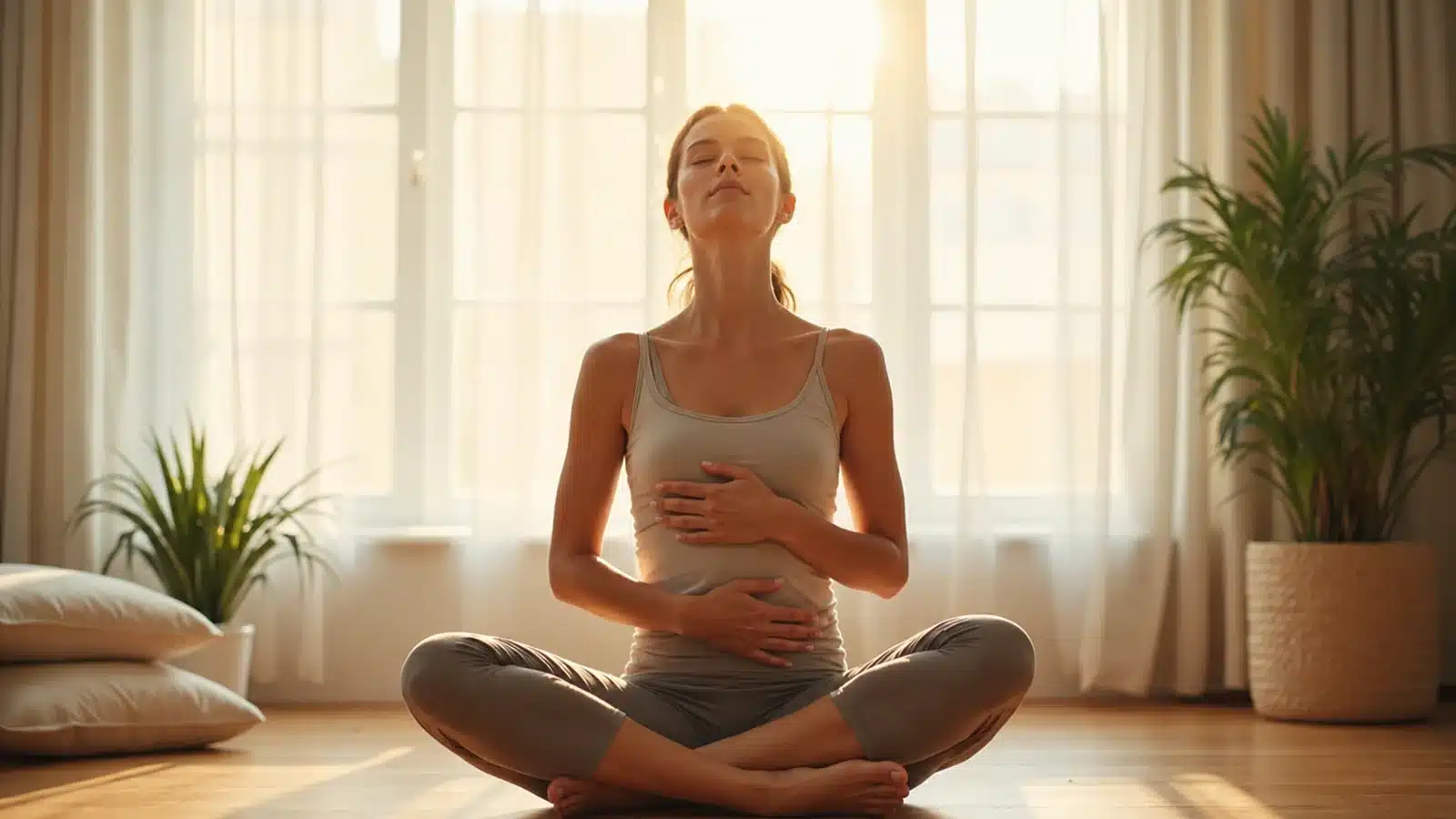
Somatic exercises help with anxiety by targeting your nervous system directly, calming the stress response before it spirals further. Anxiety doesn’t just live in your thoughts, it shows up in your body as tension, rapid breathing, and restlessness. Instead of fighting anxious thoughts, you shift your focus to physical sensations, interrupting the cycle of worry. Somatic movement practices build awareness of your body’s movements and sensations, deepening your connection to yourself. They facilitate grounding, helping you feel more present and less overwhelmed.
These somatic regulation techniques help you regulate the vagus nerve, which controls your body’s relaxation and stress pathways. When you learn how to calm anxiety attack symptoms through breath, movement, or grounding, you’re signaling safety to your body from the inside out. These techniques are a vital part of understanding nervous system regulation. When you maintain a steady connection with your body, you enhance your ability to cope with stressors.
Research shows that body-focused interventions lower subjective anxiety by anchoring you in sensation. You observe what you feel without judgment, letting your body settle naturally.
Why does stress show up as physical tension
Stress shows up as physical tension because your nervous system reacts to stress faster than your conscious mind can, so tension appears in your body before you’ve even named the feeling as anxiety. Your vagus nerve shifts you into a stress state, tightening muscles, quickening your breath, and priming you to act. That’s why your shoulders climb, your jaw clenches, and your chest constricts, your body’s holding what your mind hasn’t processed yet.
This is exactly where somatic experiencing exercises for anxiety become useful. Instead of fighting the tension, you listen to it. Somatic coping skills teach you to notice these sensations without judgment, interrupting the anxious cycle at its physical source.
When you practice somatic stress release exercises, you give your body permission to discharge what it’s been holding onto. Somatic therapy can enhance your emotional and physical wellbeing. It allows you to reconnect with your body and become more attuned to your feelings. This deeper awareness can lead to significant personal growth and healing.
What quick exercises calm an anxiety attack


Cold water, breath, and rhythm exercises calm an anxiety attack quickest because they shift your physiology, not your thoughts. Mid-anxiety attack, you need something your body can grab onto fast, not a technique that takes patience you don’t have right now. Reach for exercises that bypass your thinking brain and speak directly to your nervous system.
| Exercise | What You Do | Why It Works |
|---|---|---|
| Cold water | Submerge face 30 seconds | Triggers calming reflex |
| 4-7-8 breath | Inhale 4, hold 7, exhale 8 | Extends the exhale |
| Foot grounding | Press feet down 60–90 seconds | Anchors you to support |
| Butterfly tapping | Alternate taps on shoulders | Restores steady rhythm |
| Humming | Vibrate on long exhales | Stimulates the vagus nerve |
Pick one. Let your body lead.
How does breathwork settle the stress response
Breathwork settles the stress response by giving your nervous system a direct signal that you’re safe. When you extend your exhale, you activate the vagus nerve, shifting your body out of fight-or-flight and into calm. Try the 4-7-8 pattern: inhale for 4 counts, hold for 7, exhale for 8. That long exhale tells your body the threat has passed.
Box breathing works too. Inhale, hold, and exhale each for 4 seconds, creating a steady rhythm your system can lean on. If your breath feels shallow, place one hand on your chest and one on your abdomen, letting your belly expand fully.
You’re not forcing calm here. You’re offering your body a slower rhythm, and it responds by loosening tension and quieting the alarm.
How does releasing muscle tension ease anxious feelings
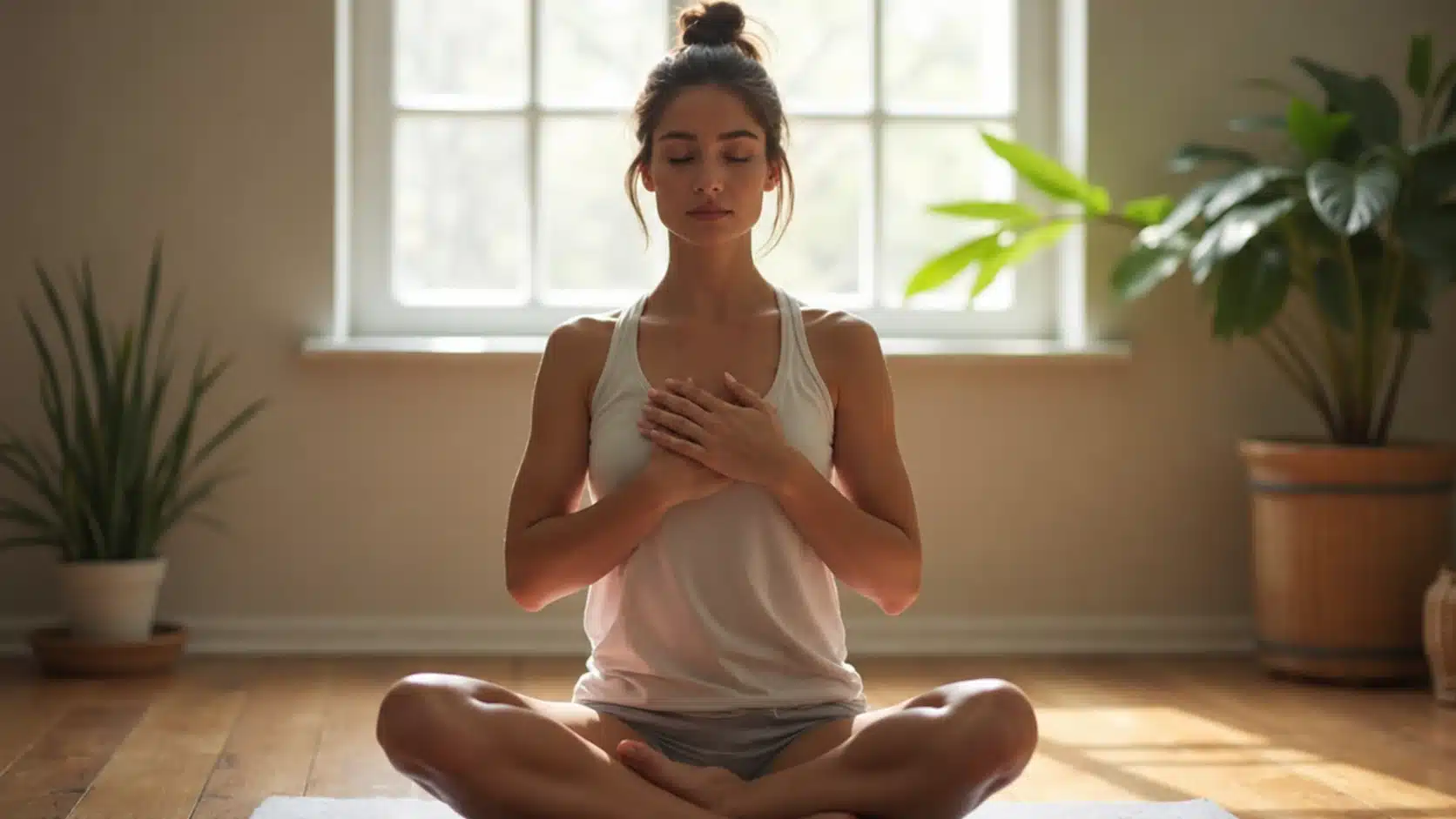
Releasing muscle tension eases anxious feelings by interrupting the feedback loop between your body and brain. When you’re anxious, your muscles brace as if bracing for impact, jaw clenched, shoulders drawn up, fists tight. This holding pattern isn’t random. Your nervous system prepares your body to fight or flee, and that tension signals danger back to your brain, keeping the alarm ringing.
When you deliberately release that tension, you interrupt the loop. Progressive muscle tension works by exaggerating what your body’s already doing: tense a group for 5 seconds, then let go. That release teaches your system what safety feels like.
Start at your face and head, hold, then relax. Move to your shoulders and upper back, squeeze, release. Finish by tensing your whole body, then exhaling everything out. Each release tells your nervous system the threat has passed.
How do you build a daily calming routine
Build a daily calming routine by anchoring practices to moments you already move through. When you wake, press your feet into the floor and notice the pressure, support, and weight shifts for 60–90 seconds. Pair your morning coffee with a few rounds of box breathing, inhaling, holding, and exhaling each for four seconds. Throughout the day, let brief check-ins interrupt rising tension. Roll your shoulders slowly, or hum to stimulate your vagus nerve.
Keep it small so your nervous system learns these cues without pressure. As evening arrives, try progressive muscle tension, releasing each group as you exhale. You’re not chasing perfection; you’re teaching your body that safety’s available on demand. Consistency matters more than duration, so return to what genuinely settles you.
How does Villa Wellness Center treat anxiety
Villa Wellness Center treats anxiety in the body first, guiding your nervous system toward safety rather than talking you out of your fear. You’ll start by learning to regulate your vagus nerve through breathing, humming, and grounding practices that shift you out of survival mode. Your practitioner watches for physical cues, tension, rapid breathing, restlessness, and responds with techniques that address them directly.
You’ll practice foot grounding, progressive muscle release, and rhythmic movement like butterfly tapping to discharge stored nervous energy. Instead of pushing you into distress, the approach honors your pace, letting sensations surface without judgment.
You’ll build body awareness through scanning and sensory anchoring, so you can recognize early stress signals and respond before anxiety escalates. Your body learns safety again, gradually.
Calm Anxiety From the Inside Out
Anxiety lives in the body, so that’s where healing begins. Villa Wellness Center treats anxiety in the body first, guiding your nervous system toward safety through somatic healing practices like grounding, breathwork, and gentle movement, all at your own pace. Verify your insurance today to see your coverage options and take the next step toward treatment or call (844) 609-3035 to get started.
Frequently Asked Questions
Are Somatic Exercises Safe for People With Physical Injuries or Disabilities?
You can adapt most somatic exercises to fit your body’s unique needs and limitations. If you’re managing an injury or disability, you’ll want to modify movements, skip anything that causes pain and honor what feels safe. Breathing techniques, humming, and gentle body scanning work well when movement’s restricted. Listen to your nervous system’s signals, move within your comfort range, and consult your healthcare provider before trying tension-release or vigorous shaking practices.
How Long Does It Take to See Results From Somatic Practices?
You’ll often feel some relief immediately, your breath slows, your shoulders drop, and your nervous system starts to settle within a single session. Techniques like 4-7-8 breathing or foot grounding can shift you in just 60-90 seconds. Lasting change, though, takes consistent practice over weeks. As you keep returning to these sensations, your body learns safety more deeply. Be patient with yourself; your nervous system heals at its own pace, not on demand.
Can Somatic Exercises Replace Medication or Therapy for Anxiety Disorders?
You shouldn’t view somatic exercises as a replacement for medication or therapy, especially with anxiety disorders. Think of them as complementary tools that help regulate your nervous system and calm your body’s stress response in the moment. They can support your healing, but they don’t address everything professional care offers. Keep working with your prescriber or therapist, and let these body-based practices strengthen what you’re already doing. You deserve full support.
Are There Any Risks or Side Effects of Somatic Exercises?
Somatic exercises are generally safe, but you might notice some risks. If you’re tensing muscles during progressive relaxation, you could strain areas that are injured, so ease off. Cold water submersion isn’t ideal if you’ve got heart concerns. Sometimes focusing inward on sensations can feel overwhelming or bring up difficult emotions, especially with trauma. Start slowly, honor your body’s signals, and stop if anything intensifies your distress rather than calming you.
Can Children or Older Adults Safely Practice Somatic Exercises?
Yes, both children and older adults can safely practice these exercises. You’ll want to adapt them to each body’s needs. For children, keep it playful, try butterfly tapping or gentle shaking. For older adults, favor seated options like foot grounding, shoulder rolling, or diaphragmatic breathing to protect balance and joints. Move slowly, notice sensations without judgment, and stop if anything feels overwhelming. Let each nervous system set its own comfortable pace.