







The label matters less than you’d think. It’s the formulation that drives how long fentanyl stays in your system. IV fentanyl clears fast, with a 2, 4 hour half-life and full clearance in roughly 11, 22 hours. A transdermal patch lingers, with a 20, 27 hour half-life and clearance beyond 36 hours. Street fentanyl averages about 7 days in urine, sometimes longer. Understanding each delivery route reveals why your timeline shifts so dramatically.
Key Takeaways
- Illicit fentanyl typically stays in the system longer than prescription fentanyl, with street versions averaging about 7 days in urine.
- Formulation and delivery route drive clearance more than whether the drug is prescription or illicit.
- IV fentanyl clears fastest, with a 2, 4 hour half-life and full clearance in roughly 11, 22 hours.
- Fentanyl patches persist longest, with a 20, 27 hour half-life and clearance extending beyond 36 hours.
- Street fentanyl accumulates in fat tissues, and its norfentanyl metabolite stays detectable for about 13 days, sometimes up to 26.
Does prescription or illicit fentanyl stay in your system longer
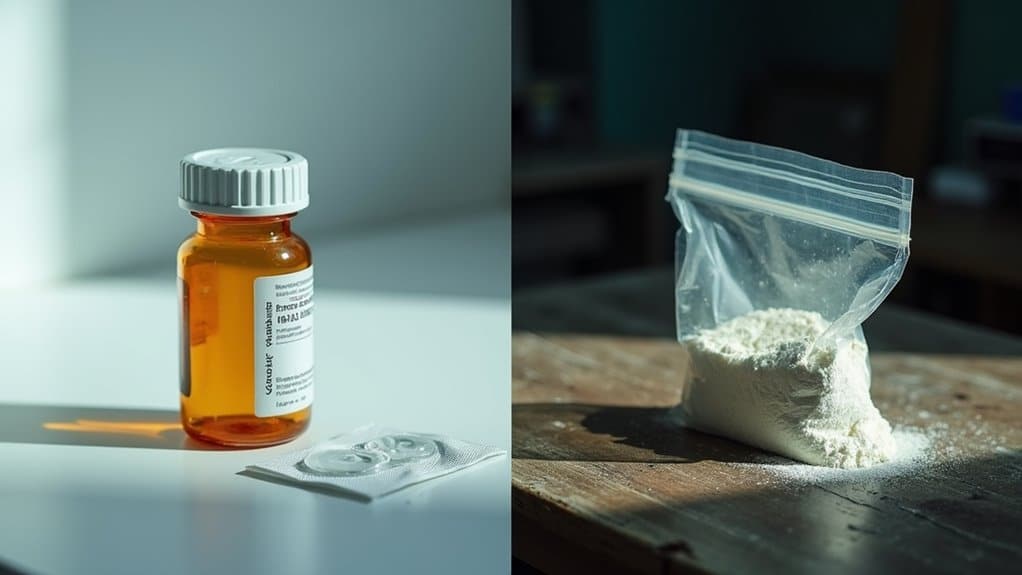
Illicit fentanyl typically stays in your system longer than prescription fentanyl, though the answer depends less on the drug itself and more on its formulation and how your body handles it. With prescription vs illicit fentanyl, formulation drives clearance. Immediate-release IV fentanyl has a short half-life of 2, 4 hours, but if you’re wondering how long does a fentanyl patch stay in your system, the skin depot extends the terminal half-life to 20, 27 hours. Understanding the fentanyl body metabolization timeline helps you anticipate the drug’s effects. It varies by factors like metabolism, body mass, dosage, and method of administration.
For how long does street fentanyl stay in your system, expect a half-life of 3, 7 hours clinically, yet tissue accumulation tells a different story. Illicit users test positive in urine for an average of 7 days, with norfentanyl detectable for 13 days, sometimes up to 26. Peripheral sequestration creates a long-acting profile despite fentanyl’s short clinical action. Understanding fentanyl halflife is crucial for medical professionals when determining appropriate treatment plans. Additionally, awareness of its prolonged effects in the body can help in managing withdrawal symptoms for users.
How does a fentanyl patch release the drug over time
A fentanyl patch releases the drug over time through its transdermal delivery system. When you apply the patch, it doesn’t dump the drug all at once. Instead, fentanyl diffuses through your skin and forms a depot in the subcutaneous tissue. This reservoir keeps releasing the drug into your bloodstream long after application, producing a slow onset of about 6 hours and effects lasting 20, 27 hours. Fentanyl clearance differences can significantly impact how patients respond to treatment. Understanding these variations is essential for healthcare providers to tailor dosage and improve patient outcomes.
That depot explains why the terminal half-life stretches to 20, 27 hours. So how long does fentanyl patch stay in your system? Clearance typically takes 36+ hours because of continued release. Compare that with how long does IV fentanyl stay in your system, just 11, 22 hours, since there’s no skin depot prolonging elimination.
How does IV or injected fentanyl behave differently


IV or injected fentanyl hits your bloodstream almost immediately, producing effects within seconds to minutes, unlike a patch’s slow-release depot. You’ll experience a rapid onset because there’s no absorption barrier delaying delivery. With immediate-release pharmaceutical fentanyl, your IV half-life typically runs 2, 4 hours, significantly shorter than transdermal formulations. This short duration stems from rapid redistribution into other tissues rather than actual elimination.
Acute IV use gives you a shorter duration of action, usually 2, 4 hours, as the drug quickly leaves your plasma. Full clearance takes roughly 11, 22 hours for IV administration, spanning several half-lives. However, if you’re using illicitly and repeatedly, tissue accumulation extends your total exposure. Your body fat sequesters fentanyl due to its lipophilicity, prolonging retention and detectability well beyond clinical effects.
How long does street fentanyl take to clear
Street fentanyl clears far less predictably than its pharmaceutical counterpart, with a half-life ranging from 3 to 7 hours depending on potency and manufacturing method. Don’t assume rapid clearance, though. When you use illicitly, fentanyl sequesters into your fat tissues thanks to its high lipophilicity, creating a peripheral depot that releases the drug slowly. This accumulation gives street fentanyl a long-acting profile despite its clinically short duration.
If you’re entering treatment, expect fentanyl to test positive in your urine for an average of 7 days, while norfentanyl metabolites persist for roughly 13 days, and up to 26 in some cases. Your body fat, metabolism, and frequency of use all extend these windows. Regular use compounds tissue accumulation, prolonging exposure well beyond your last dose.
How do the delivery methods compare for detection time
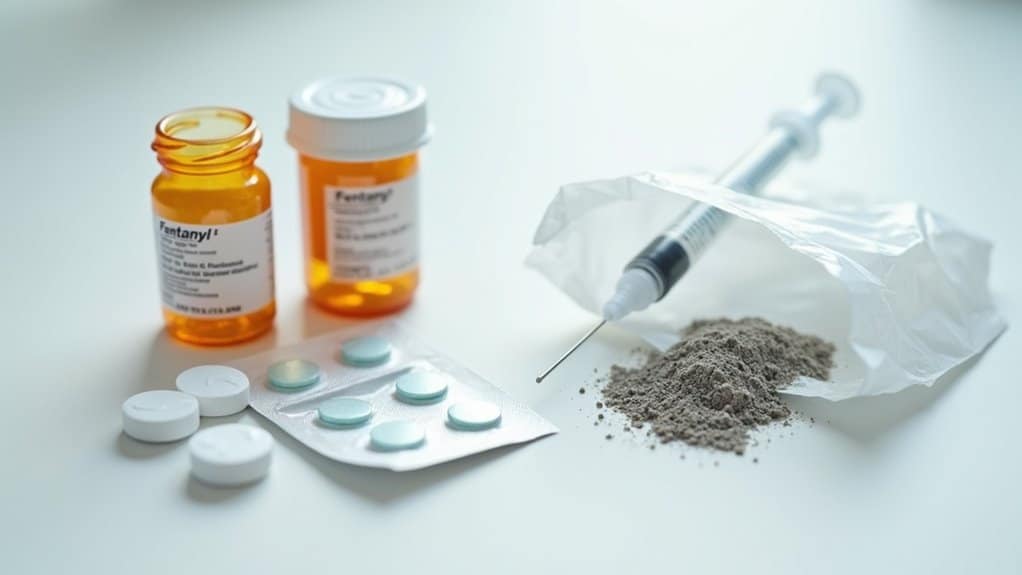
Delivery methods differ significantly in detection time because each route alters how quickly fentanyl enters and exits your system. Intravenous administration hits your bloodstream within minutes but clears fast, with a 2, 4 hour half-life and full clearance around 11, 22 hours. Transdermal patches create a skin depot, extending the terminal half-life to 20, 27 hours and clearance beyond 36 hours. Transmucosal routes fall between, showing half-lives of 3, 14 hours.
| Delivery Method | Half-Life | Clearance Window |
|---|---|---|
| Intravenous | 2, 4 hours | 11, 22 hours |
| Transmucosal | 3, 14 hours | Variable |
| Transdermal patch | 20, 27 hours | 36+ hours |
Why does inconsistent street potency make timing unpredictable
Street fentanyl throws off your timing estimates because illicit formulations lack standardized dosing, so you can’t predict potency or clearance from one batch to the next. Illicit fentanyl typically shows a half-life of 3, 7 hours, but that range shifts with manufacturing methods and concentration. Higher doses directly extend your detection window, and regular use compounds this through tissue accumulation. Fentanyl’s high lipophilicity drives rapid sequestration into fat, creating peripheral reservoirs that release the drug slowly after your last dose. That’s why illicit users test positive in urine for an average of 7 days, with norfentanyl metabolites lingering up to 26 days. Without knowing what you’ve actually taken, you can’t reliably estimate onset, duration, or clearance, making timing genuinely unpredictable.
How does Villa Wellness Center treat fentanyl dependence
Villa Wellness Center treats fentanyl dependence by starting with medically supervised detox to manage the risks of cessation. Since withdrawal can begin within 12, 24 hours after your last dose, clinicians monitor you closely as symptoms emerge and intensify. Because tissue accumulation from regular illicit use prolongs exposure long after effects subside, your detox timeline gets adjusted to account for sequestration in fat and delayed metabolite elimination. You’ll receive medication-assisted treatment to stabilize you, ease symptom severity, and reduce relapse risk during this vulnerable window. Providers also assess your organ function, body composition, and use history, factors that directly influence how long fentanyl lingers in your system. From there, you’ll proceed into structured therapy targeting the psychological drivers of dependence.
Every Fentanyl Timeline Is Different, So Is Every Recovery
Whether it’s a patch, IV, or unpredictable street fentanyl, tissue accumulation can keep the drug in your system long after your last dose. Villa Wellness Center starts drug addiction treatment with medically supervised detox, adjusting your timeline for organ function, body composition, and use history, then moves you into therapy that targets the roots of dependence. Contact us or call (844) 609-3035 to begin.
Frequently Asked Questions
Can Drinking Water Help Flush Fentanyl Out Faster?
Drinking water won’t meaningfully speed up fentanyl elimination. Because fentanyl’s highly lipophilic, it sequesters into your fat tissues rather than staying water-soluble for quick urinary excretion. Your liver metabolizes it into norfentanyl, and your kidneys clear those metabolites at rates set by organ function, not hydration. You can’t outdrink several half-lives, 11, 22 hours for IV use, longer for patches. Overhydrating won’t help and risks dangerous electrolyte imbalances instead.
Does Exercise Speed up Fentanyl Elimination From the Body?
Exercise won’t reliably speed up fentanyl elimination. Because fentanyl’s highly lipophilic, it sequesters rapidly into your fat tissues, and burning fat through activity doesn’t guarantee faster clearance. Your elimination rate depends mainly on metabolism, liver and kidney function, and how many half-lives have passed. If you’ve got higher body fat, you’ll likely retain it longer regardless. Don’t count on workouts to shorten detection windows or accelerate withdrawal timing.
Can Secondhand Exposure Cause a Positive Fentanyl Test?
You’re unlikely to test positive from secondhand exposure alone. The provided data doesn’t address passive or environmental fentanyl exposure, so there’s no evidence here supporting incidental positives. What’s documented is that detection depends on actual use, dose, frequency, and duration, with urine tests catching fentanyl for up to 72 hours and metabolites like norfentanyl persisting for days. If you’re concerned about a specific exposure scenario, you’ll want clinical confirmation testing.
Is Fentanyl Detectable in Breast Milk After Use?
Yes, fentanyl passes into breast milk after use. Because fentanyl’s highly lipophilic, it readily transfers into fatty milk tissue and can be detected there. The detection window depends on your dose, frequency of use, and metabolism, all factors that influence how long fentanyl and its metabolites persist. Given fentanyl’s potency, you shouldn’t breastfeed after use without medical guidance, since even trace amounts can pose serious risks to nursing infants.
Do Other Medications Cause False Positives for Fentanyl?
The provided knowledge doesn’t include data on medications causing false positives for fentanyl, so you can’t draw evidence-based conclusions from it here. What’s documented instead focuses on detection windows, metabolite persistence, and physiological factors affecting elimination. For your specific question about cross-reactivity with other medications, you’ll need to consult toxicology-specific resources or your testing lab, since immunoassay accuracy and interference profiles fall outside this dataset’s scope. Always confirm positives with confirmatory testing.