







Fentanyl’s high fades fast, lasting anywhere from 30 minutes to 6 hours depending on how you use it. But the drug lingers far longer, staying in your body for roughly 10 to 24 hours after your last dose. Here’s what matters most: respiratory depression outlasts the pleasurable effects, so you’re still at risk even when you feel recovered. That gap between feeling “done” and being safe explains why timing this drug is so dangerous.
Key Takeaways
- The “high” lasts 30 minutes to 6 hours, depending on route, while clinical effects persist roughly 4 to 24 hours.
- Fentanyl remains in the body about 10 to 24 hours after the last dose, requiring 5 to 6 half-lives to clear.
- Respiratory depression outlasts pain relief and pleasurable effects, keeping overdose risk high even when you feel recovered.
- Standard urine tests detect fentanyl for 24 to 72 hours, but norfentanyl metabolites can remain detectable for up to 26 days.
- Fentanyl accumulates in fat and muscle, slowly releasing back into the bloodstream and behaving like a long-acting opioid in regular users.
How long do fentanyl’s effects last compared to how long it stays in your body

Fentanyl’s effects last from 30 minutes to 96 hours depending on how you take it, even though the drug lingers in your body for hours or even days. This gap exists because your body handles fentanyl’s effects very differently from its elimination. So how long does fentanyl effects last? With intravenous use, peak analgesia hits within minutes but lasts just 30 to 60 minutes. Ask fentanyl high how long does it last, and you’ll find oral or nasal routes stretch effects to 4 to 6 hours, while patches sustain them 72 to 96 hours.
Yet the fentanyl effects vs detection gap is striking. Even after your high fades, fentanyl stays in your body for 10 to 24 hours, and norfentanyl metabolites remain detectable in urine for an average of 13 days, far outlasting anything you’ll feel. Blood testing for fentanyl presence can be crucial in understanding your body’s exposure to this dangerous substance. Many users remain unaware of the lingering effects it can have long after initial use.
How long does a fentanyl high actually feel
A fentanyl high lasts anywhere from 30 minutes to 6 hours depending on how you take it. If you receive it intravenously, peak analgesia hits within minutes, but the effects fade fast, lasting only 30 to 60 minutes. Intramuscular injection starts working in 7 to 8 minutes and lasts 1 to 2 hours. When you take it orally or as a nasal spray, onset delays to 15 to 30 minutes, though effects persist 4 to 6 hours. So how long is a fentanyl high? It varies considerably by route. How long does fentanyl last matters clinically because respiratory depression often outlasts the analgesic effect. Understanding how long is a fentanyl high helps you recognize that the pleasurable sensation ends well before the drug clears your system.
Why does the body hold onto fentanyl after the effects stop

Your body holds onto fentanyl because it is highly fat-soluble, so it sequesters in your fat and muscle tissue, creating a reservoir that slowly leaks back into your bloodstream. This peripheral accumulation gives fentanyl a long-acting profile in regular users, even though the analgesic effects wear off quickly.
You ask about fentanyl how long does it last, and elimination takes 5 to 6 half-lives, keeping it in your body 10 to 24 hours after your last dose. At steady state, the elimination half-life extends to 7 to 12 hours. That’s why detection windows and metabolites persist far beyond the short-lived high you feel. The halflife of fentanyl in blood varies by individual metabolism and dosage, making this timeframe crucial for medical professionals managing treatment. It also helps in assessing overdose risks and the need for timely interventions.
How do intoxication, clinical effects, and detectability differ
Fentanyl affects you across three distinct timelines that rarely align. Your intoxication, the high, fades fastest, clinical dangers linger longer, and detectability outlasts both by days. This mismatch matters: you might feel “recovered” while respiratory depression still threatens you, and you’ll test positive long after every symptom resolves. Understanding prescription vs illicit fentanyl matters, prescription fentanyl is medically supervised for severe pain, while illicit fentanyl is often mixed with other substances, raising overdose risk and threatening public health and safety.
| Timeline | Duration | What It Means for You |
|---|---|---|
| Intoxication (high) | 30 min, 6 hrs | Depends on your route |
| Clinical effects | 4, 24 hrs | Respiratory risk persists |
| Detectability | Hours, months | Varies by test type |
Respiratory depressant effects consistently outlast analgesia across every administration method, so you can’t gauge safety by how you feel. Norfentanyl metabolites remain detectable in your urine for an average of 13 days, extending detection well beyond your brief high.
Why can you still fail a drug test after the high is gone
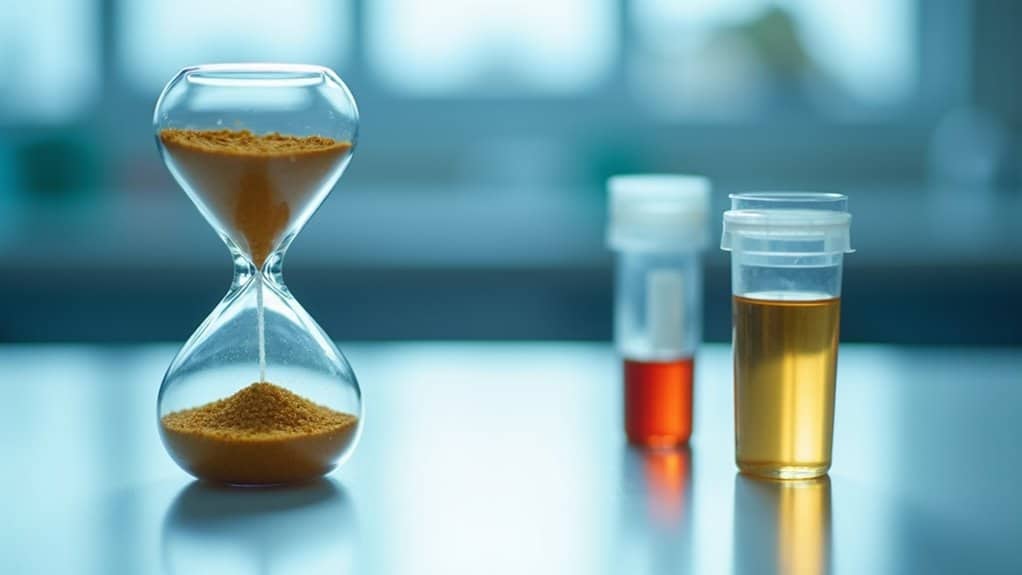
You can fail a drug test after the high is gone because your body keeps processing fentanyl long after the euphoria disappears. The drug’s analgesic effects wear off quickly, but its metabolites linger far longer, extending your detection window well beyond the short-lived high. Norfentanyl, fentanyl’s primary metabolite, stays detectable in your urine for an average of 13 days, reaching up to 26 days in some cases. Standard urine tests can identify fentanyl for 24 to 72 hours, but if you’re a treatment patient or regular user, you’ll average 7 days. Blood tests detect the drug for 5 to 48 hours, and hair follicle tests retain evidence for up to three months. So even after you feel completely normal, you can still test positive.
Why does this gap raise the risk of overdose
This gap raises overdose risk because respiratory depression outlasts pain relief across every administration route, so when your pain relief fades you might think the drug has worn off and take another dose, stacking a new dose on top of active drug still suppressing your breathing. Fentanyl also accumulates in fat and muscle, releasing slowly and behaving like a long-acting opioid in regular users. That means the drug builds up even when you don’t feel it working. Naloxone reversal wears off in 20 to 90 minutes, so symptoms can return after treatment. Recognizing this mismatch is why clinicians monitor you for 12 to 24 hours after toxicity.
How does Villa Wellness Center help people stop using fentanyl
Villa Wellness Center gives you medically supervised care that accounts for how fentanyl behaves in your body, making it safer than quitting on your own where the drug’s long-acting profile and outlasting respiratory effects create danger. You’ll receive monitoring during the critical 12- to 24-hour window when recurrent sedation or respiratory depression can emerge, especially since fentanyl accumulates in fat and muscle and clears slowly. Because naloxone wears off in 20 to 90 minutes, your team watches for returning symptoms rather than treating one dose as the end. You’ll also get support through the extended detection and withdrawal period, when metabolites like norfentanyl linger for days. With medical oversight, medication management, and ongoing observation, you can stop using fentanyl safely instead of facing its unpredictable, prolonged effects alone.
Feeling Recovered Isn’t the Same as Being Safe
Fentanyl lingers in your body long after the high fades, and its respiratory risks outlast the effects you can feel. Villa Wellness Center offers medically supervised drug addiction treatment that accounts for how fentanyl behaves in your body, with monitoring, medication management, and support through the extended withdrawal period. Contact us or call (844) 609-3035 to stop using safely.
Frequently Asked Questions
Can Naloxone Fully Reverse a Fentanyl Overdose in One Dose?
One dose of naloxone might not fully reverse your fentanyl overdose. Naloxone wears off in 20 to 90 minutes, but fentanyl’s respiratory depressant effects often outlast that window, so your symptoms can return after initial treatment. You’ll likely need repeat doses and close monitoring. Because you’re at risk of recurrent sedation or respiratory depression, you should expect a minimum observation period of 12 to 24 hours to stay safe.
Does Body Weight Affect How Long Fentanyl Stays Detectable?
Yes, your body weight does affect how long fentanyl stays detectable. If you’re overweight, you’ll test positive in urine for a notably longer duration than someone at a healthy weight. That’s because fentanyl accumulates in your fat and muscle tissue, creating a long-acting profile with peripheral sequestration. This stored drug releases slowly over time, extending your detection window well beyond what you’d expect from the drug’s short-lived effects.
Which Drug Test Has the Longest Fentanyl Detection Window?
Hair follicle testing gives you the longest fentanyl detection window, retaining evidence of use for up to three months. That’s far longer than blood tests, which detect fentanyl for 5 to 48 hours, or urine tests, which identify it for 24 to 72 hours, though you might test positive for about 7 days if you’re in treatment. So if you need extended detection, hair analysis is your most reliable option.
Can You Develop a Tolerance to Fentanyl’s Effects?
Yes, you can develop a tolerance to fentanyl’s effects. With regular use, your body adapts, so you’ll need higher doses to achieve the same analgesia. It’s worth noting that fentanyl accumulates in your fat and muscle tissue, creating a long-acting profile that mimics extended-release opioids. This peripheral sequestration means the drug lingers in your system, and repeated exposure can shift your body’s sensitivity, complicating both pain control and safety monitoring.
Is Fentanyl Safe to Combine With Other Medications or Substances?
No, combining fentanyl with other medications or substances isn’t safe without medical supervision. Fentanyl’s respiratory depressant effects often outlast its analgesic effects, and mixing it with other central nervous system depressants dangerously amplifies this risk. You should also know naloxone reversal wears off in 20 to 90 minutes, so symptoms can reappear. If you’re prescribed fentanyl, tell your provider about every substance you’re taking to avoid life-threatening interactions.