


TMS can reduce your anxiety symptoms, though it’s not FDA-approved specifically for anxiety disorders. Clinical research shows response rates around 40% or higher, with GAD-specific studies reporting rates exceeding 80%. You’ll typically notice improvements within two to four weeks, and results often last six to twelve months. TMS works by stimulating your prefrontal cortex to calm overactive anxiety circuits. Understanding who responds best and why can help you determine if it’s the right option.
Does TMS Actually Work for Anxiety?
You should know that results aren’t uniform across every trial, one study found no notable improvement. However, a 2025 systematic review confirmed markedly reduced anxiety scores in treatment groups, with effects remaining stable at follow-up. The evidence is strongest for generalized anxiety disorder and anxiety co-occurring with depression. TMS works by using magnetic pulses to stimulate the dorsolateral prefrontal cortex, which strengthens emotional regulation and calms overactive anxiety responses.
Response Rates and How Long Results Last
While individual outcomes vary, clinical research points to meaningful response rates. Studies report anxiety response rates around 40% or higher, with some GAD-specific samples showing rates exceeding 80%. When TMS is combined with psychotherapy, response rates can reach 66% or more. Remission figures typically range from 30, 56%, depending on the population studied.
You can expect initial improvements within two to four weeks of starting treatment. A standard course runs four to six weeks, though some patients notice subtle shifts after just a few sessions. One study found that low-frequency TMS led to a 78% reduction in anxiety and panic symptoms.
Results commonly last six to twelve months after completing a full course. Some data show over 60% of responders maintaining benefits at one year. If symptoms return, maintenance sessions can help sustain your gains over time.
Who Benefits Most From TMS for Anxiety?
Not everyone responds to TMS equally, and understanding which profiles tend to benefit most can help you decide whether it’s a realistic option.
You’re a stronger candidate if your anxiety hasn’t improved after two or more medications, where the next drug carries only a 10%, 15% success rate. Research shows treatment-resistant patients experience 35%, 40% average symptom reduction with TMS. Those with generalized anxiety disorder or co-occurring depression also tend to respond well, as TMS targets overlapping mood and stress-regulation circuits.
If you’re exploring TMS for stress and anxiety but want to avoid medication side effects, the noninvasive profile makes it worth considering. You’ll need to commit to five sessions weekly for four to six weeks. A provider can determine whether your specific presentation warrants this approach. During an initial assessment, brain mapping identifies the optimal stimulation site to ensure treatment is tailored to your individual needs.
Why TMS for Anxiety Is Still Off-Label
Although TMS shows real clinical promise for anxiety, the FDA hasn’t cleared it for this indication. The agency has approved TMS for major depressive disorder and OCD, but anxiety lacks the standardized evidence package required for formal clearance. This makes TMS for anxiety an off-label anxiety treatment, common in clinical practice but without regulatory endorsement.
That distinction matters for you practically. Insurance coverage typically aligns with FDA-cleared indications, so off-label anxiety treatment often requires additional documentation or out-of-pocket costs. It also means the evidence, while promising, including meta-analyses showing significant symptom reduction, hasn’t met the specific threshold the FDA demands.
Off-label doesn’t mean ineffective. It reflects a regulatory gap, not a clinical verdict. Your provider can help you weigh the existing evidence against your treatment history and goals.
How TMS Changes Your Brain’s Anxiety Response
TMS delivers magnetic pulses to the dorsolateral prefrontal cortex, strengthening its regulatory control over deeper structures like the amygdala. Imaging studies show increased prefrontal activity and reduced amygdala hyperactivity after treatment, meaning your brain’s threat-detection circuitry quiets down through top-down modulation, not systemic medication.
Fast-pulse protocols boost neurotransmitter release, including serotonin, dopamine, and norepinephrine, supporting mood stabilization and emotional regulation. So does TMS help anxiety? The mechanism is promising: it targets the same circuits driving excessive worry and fear responses.
This isn’t symptom masking. It’s circuit-level change, altering how your brain processes threat signals rather than blunting your neurochemistry broadly.
Call Today and Explore Advanced Treatment Options
If you’re looking for effective care beyond traditional medication or talk therapy, modern treatment can make a powerful difference. At Villa Wellness Center in Sicklerville, NJ, our caring professionals deliver dependable TMS Therapy designed to support every step of your healing. Call +1 (844) 609-3035 today and begin a healthier chapter in your life.
Frequently Asked Questions
What Does a TMS Session for Anxiety Actually Feel Like?
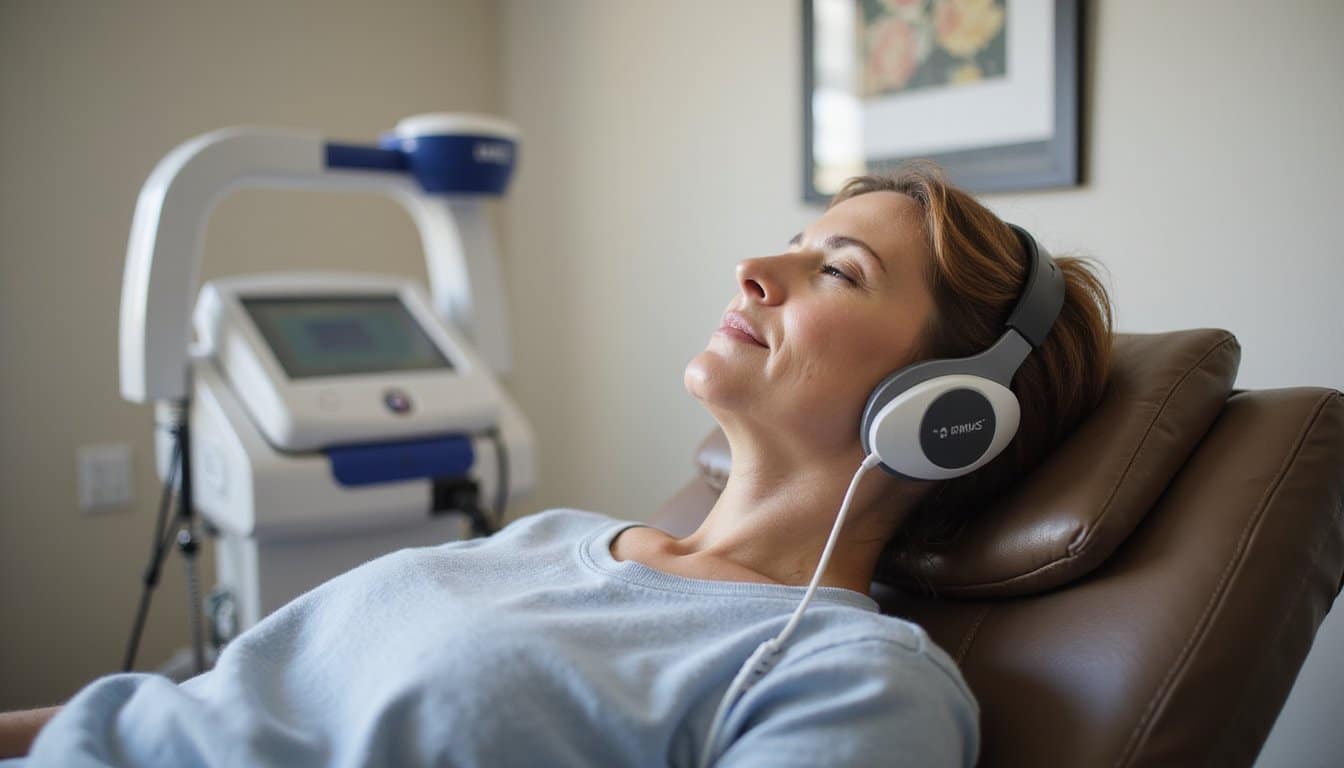
You’ll feel a rhythmic tapping or knocking sensation on your scalp where the coil is placed. You may notice slight tingling or brief twitching in your facial, scalp, or jaw muscles during pulses. Most people don’t find it painful, though you might experience mild scalp sensitivity, especially in early sessions. You’ll stay awake and seated throughout, and any discomfort typically decreases as your body acclimates over subsequent treatments.
How Much Does TMS for Anxiety Cost Without Insurance?
Without insurance, you’ll typically pay $300 to $500 per session, with a full treatment course totaling $6,000 to $12,000 over 30 to 36 sessions. Accelerated protocols like SAINT can run $30,000 to $36,000 but deliver results in about five days. Costs vary by location, device type, and clinic pricing. Many clinics offer package deals or payment plans to reduce your out-of-pocket burden.
Can You Do TMS for Anxiety While Taking Medication?
Yes, you can typically continue your prescribed medications while receiving TMS for anxiety. Most providers recommend maintaining your current regimen, as combining TMS with medication often produces better outcomes than either approach alone. TMS is non-systemic, so it won’t interact with your medications the way another drug might. However, you shouldn’t start, stop, or adjust any medication during treatment without consulting your prescribing clinician first.
Are There Any People Who Should Not Try TMS?
Yes, certain people should avoid TMS or require extra screening. You shouldn’t try TMS if you have metal implants in or near your head, certain implanted electronic devices, or an uncontrolled seizure disorder. Providers also evaluate pregnancy, unstable medical conditions, bipolar disorder with active mania, and medications that lower your seizure threshold. A thorough screening guarantees TMS is safe and appropriate for your specific situation.
How Many TMS Sessions Are Needed Before Anxiety Improves?
You can expect to notice early anxiety improvement after about 10 to 15 sessions, typically around weeks two to three. Fuller benefits usually build over a standard course of 20 to 36 sessions, spanning four to six weeks. Improvement tends to be gradual rather than immediate, so you shouldn’t judge effectiveness after just a few treatments. Your provider may also recommend booster sessions depending on how you respond.