





Salvia divinorum isn’t illegal under federal law, but states started banning it on their own beginning in 2005. Louisiana led the way with House Bill 20 (Act No. 159), criminalizing its sale for human consumption. Missouri, Delaware, and Tennessee followed between 2005, 2006, classifying salvinorin A as Schedule I. By 2008, Florida had enacted a full statewide ban. Today, 32 states have imposed prohibitions, though the specific penalties and restrictions vary widely from state to state. The effects of salvia divinorum on the brain have been a subject of interest for both researchers and users alike.
Was Salvia Ever Illegal Under Federal Law?
Despite widespread state-level bans that began in 2005, salvia divinorum has never been classified as a controlled substance under the federal Controlled Substances Act. You won’t find salvinorin A listed under Schedule I, II, III, IV, or V. The DEA has labeled salvia a “drug of concern” but hasn’t pursued formal scheduling, citing insufficient evidence of abuse patterns comparable to federally controlled substances. In 2002, the Hallucinogen Control Act attempted to place salvia under Schedule I classification, but the effort ultimately failed, though it did heighten federal awareness of the substance.
This distinction is critical to understanding salvia legal history. Federal law has treated salvia as an unscheduled psychoactive plant, leaving states as the primary enforcers of restrictions. When you review the salvia ban history, you’ll find that federal inaction directly created the patchwork of state laws that define salvia’s legal status today. Salvia legality across the United States varies significantly from one state to another. Some states have chosen to fully ban the substance, while others impose minimal restrictions or none at all.
Louisiana Banned Salvia First in 2005
Louisiana became the first U.S. state to ban salvia divinorum when House Bill 20 was introduced on February 25, 2005, passed through the legislature, and was signed into law on June 28, 2005. Act No. 159 took effect on August 8, 2005, making Louisiana the definitive answer to when was salvia made illegal at the state level.
The Louisiana salvia ban 2005 prohibited 40 plants, including salvia divinorum, when sold for human consumption. You could still possess the plant if it wasn’t intended for ingestion. However, penalties were severe: simple possession carried up to five years in prison, while production or distribution brought up to ten years, potentially including hard labor. Louisiana’s consumption-focused framework became a model for later state bans. Several states that followed took varied approaches, with some like Georgia classifying salvinorin A as a dangerous drug while including exemptions for aesthetic purposes.
Which States Made Salvia Illegal After Louisiana?
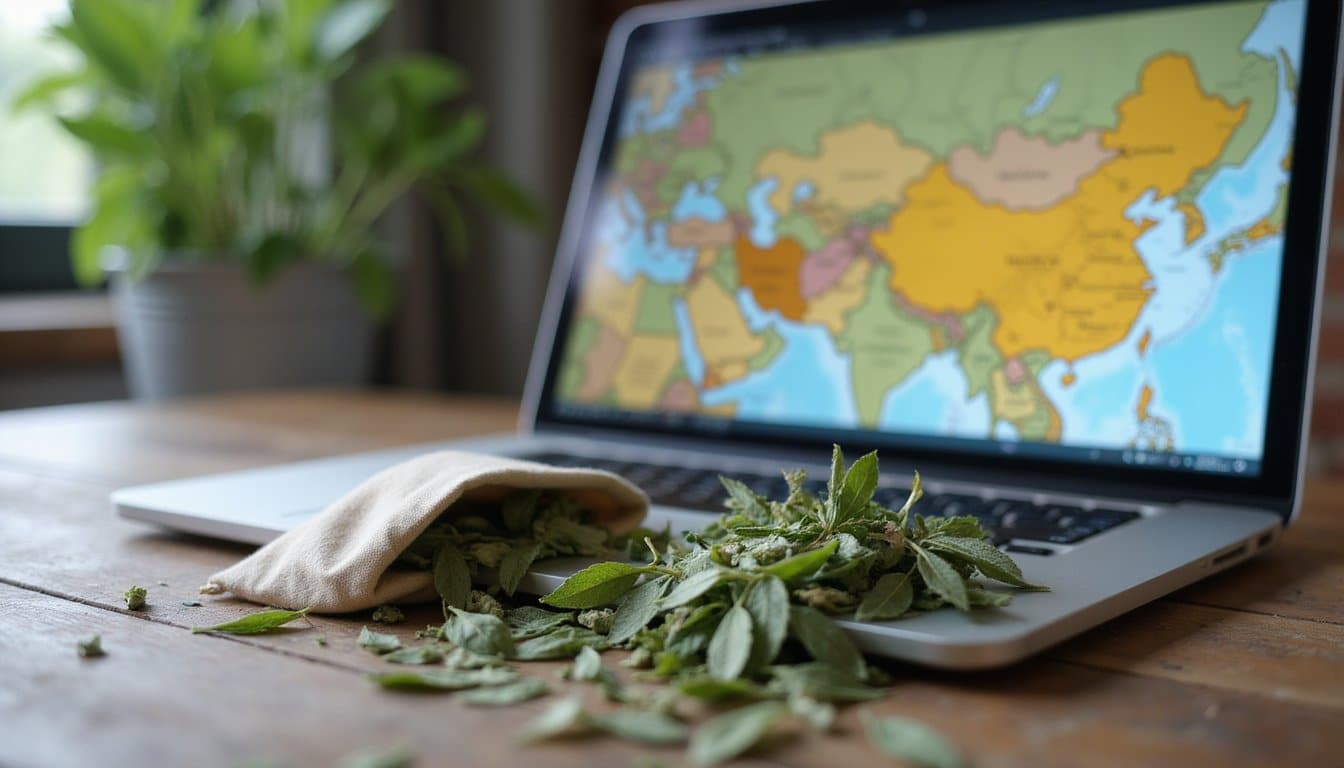
After Louisiana’s 2005 ban, you’ll find that Missouri, Delaware, and Tennessee moved quickly to classify salvia divinorum as a Schedule I substance, making them the earliest states to follow suit between 2005 and 2006. Florida, Illinois, and Minnesota enacted their own prohibitions shortly after, expanding the wave of state-level restrictions through 2008. By the end of that period, you’re looking at a patchwork of laws, some states like Oklahoma banned only extract-enhanced forms, while others imposed felony-level penalties for simple possession. In Iowa, for example, unauthorized possession is classified as a Class C felony, carrying penalties of up to 10 years in prison.
Early Adopter States
When you review the salvia legal timeline, you’ll notice Delaware and Tennessee mirrored Louisiana’s approach, applying criminal penalties for possession, sale, and distribution rather than simple age restrictions. Florida and Illinois joined this early wave shortly after, expanding the geographic reach of prohibition. Together, these early adopter states established the patchwork regulatory framework that still defines salvia’s legal status across the country today.
Expanding State Prohibitions
Because Louisiana’s 2003 ban demonstrated that states could act independently of federal scheduling, a rapid wave of prohibitions followed across the country. You’ll find that each salvia divinorum ban emerged from similar legislative conditions: safety concerns, media coverage, and the absence of federal action.
- Missouri and Delaware moved next, placing salvinorin A on their Schedule I lists by 2005, 2006.
- Tennessee enacted its own prohibition during the same early wave.
- Florida followed in 2008, criminalizing possession and sale statewide.
- Illinois and Minnesota joined the expanding list of states addressing why is salvia illegal through full statutory bans.
- Several states adopted narrower restrictions instead, including age-based sales limits or extract-specific prohibitions.
You should note this patchwork reflected each state’s independent legislative priorities rather than coordinated federal policy.
Where Is Salvia Still Legal or Only Restricted?
How does salvia’s legal status actually break down across the United States today? Because federal scheduling never occurred, state law determines whether salvia’s legal in your jurisdiction. Fifteen states, including Alaska, Oregon, New York, and Washington, impose no restrictions on possession or sale. In these states, can you still buy salvia? Yes, retailers openly stock it.
Three states, California, Maine, and Maryland, adopted age-restriction models rather than outright bans, limiting purchases to adults 18 and older. These policies target youth access without criminalizing adult use.
The remaining 32 states enacted full prohibitions, typically classifying salvinorin A as Schedule I. Florida’s ban took effect in 2008, Texas followed in 2011. You’ll face criminal penalties identical to those for heroin or LSD possession in these jurisdictions.
Why Did States Move to Ban Salvia So Quickly?
The patchwork of bans, age restrictions, and full legality across states didn’t emerge from careful, synchronized policymaking, it resulted from rapid, reactive legislation that moved faster than federal review ever did.
- Youth access and teen use accelerated bans: minors could purchase salvia more easily than federally scheduled substances, prompting states like Delaware and Missouri to act by 2005, 2006.
- Media attention and isolated incidents pushed lawmakers: a widely cited 2006 Delaware teen suicide linked to salvia triggered fast-moving bills nationwide.
- The DEA’s “drug of concern” designation gave states political cover to criminalize salvia without waiting for federal scheduling.
- No accepted medical use removed the primary barrier to Schedule I classification at the state level.
- Legislative timelines compressed dramatically, most bans passed within months of publicized incidents, bypassing extended epidemiological review.
Why There’s No Single Nationwide Salvia Ban
Unlike most hallucinogens that gained widespread attention in the U.S., salvia divinorum has never been placed on the federal Controlled Substances Act‘s schedules, despite repeated attempts to put it there. The DEA has labeled it a “drug of concern,” but Congress hasn’t passed legislation to schedule it nationally. This means you won’t find a single federal prohibition overriding state decisions. Salvia and weed effects can vary significantly from person to person. While salvia may induce intense hallucinations, the effects of weed are often more relaxing and euphoric.
How to Find Your State’s Current Salvia Laws
Because no federal schedule governs salvia divinorum, you’ll need to check your own state’s controlled-substances statute to determine whether possession, sale, or use carries any legal consequences. Salvia legality varies considerably by jurisdiction, so confirm your state’s current classification before purchasing or possessing any form of the plant.
Use these steps to verify your state’s law:
- Search your state’s legislative website for “Salvia divinorum” or “salvinorin A” within the state controlled-substances statute.
- Check whether the law targets the living plant, dried leaf, extracts, or the active compound specifically.
- Identify the type of restriction, outright ban, age limitation, or sales-only prohibition.
- Review recent legislative session updates for any amendments enacted after commonly cited legal-state lists were published.
- Consult your state attorney general’s office for official interpretive guidance on current enforcement priorities.
Call Today and Reclaim Your Mental Clarity
Strong substances like salvia can put your mind and emotional well-being at risk over time. At Villa Wellness Center, our compassionate professionals deliver dependable Drug Addiction Treatment built around your unique needs and circumstances. Call +1 (844) 609-3035 today and begin a healthier chapter in your life. Verify your insurance today to see your coverage options and take the next step toward treatment.
Frequently Asked Questions
Can Salvia Divinorum Be Used Legally for Medical Research Purposes?
You can legally use salvia divinorum for medical research at the federal level since it’s not scheduled under the Controlled Substances Act. However, you’ll need to check your state’s laws, at least 29 states have enacted bans or restrictions since Delaware and Missouri first acted in 2005, 2006. Several states provide narrow research exemptions for accredited institutions. You’ll also need institutional approval and ethics review for human-subject studies.
What Are the Criminal Penalties for Possessing Salvia in States Where It’s Banned?
You’ll face penalties ranging from misdemeanors to felonies, depending on your state. Illinois classified salvia as Schedule I in 2008, making possession a felony. Louisiana’s laws carry up to 5 years for possession and up to 10 years for distribution. Kansas criminalized possession and sale in 2008 under serious criminal categories. You’ll find that quantity, intent to distribute, and prior offenses can escalate your charges substantially.
Is Salvia Divinorum Legal to Grow as a Houseplant in Restricted States?
You can grow salvia as a houseplant in some restricted states, but it depends on how each state’s law is written. States like Louisiana, Georgia, and Tennessee target salvia intended for human consumption, so ornamental growing may fall outside their bans. However, if authorities link your cultivation to ingestion or distribution, you’d still face penalties. You should check your state’s current statutes, since laws have changed frequently since 2005.
Has Anyone Been Prosecuted Specifically for Selling Salvia Divinorum Online?
You won’t find widely documented federal prosecutions specifically for selling salvia divinorum online, since it’s never been federally scheduled. However, you’ll face real legal exposure through state-level charges if you ship into jurisdictions that banned salvia between 2005 and 2012 under their Schedule I statutes. Enforcement actions have typically targeted local possession and distribution rather than producing landmark internet-sales cases, leaving online prosecution records sparse and inconsistent across states.
Could Salvinorin a Ever Be Reclassified as an Approved Pharmaceutical Treatment?
You’d need to see salvinorin A complete full FDA drug development, preclinical studies, controlled clinical trials, standardized dosing, and toxicology reviews, before it could earn approved pharmaceutical status. Currently, it has no approved medical use, per the DEA’s own fact sheet. Researchers have explored modified analogs that reduce hallucinogenic effects while preserving kappa-opioid receptor activity, making that pathway more realistic. Without demonstrated clinical benefit, you won’t see reclassification under current regulatory standards.