







You’ll move through five connected stages. First, you’re screened and assessed for your substance-use history, physical health, and withdrawal or overdose risk. If you’re physically dependent, you’ll enter detox, often medically supervised for three to seven days. Next, your team builds an individualized treatment plan and matches your care level. You’ll engage in therapy, medication management, and case coordination. Finally, you’re stepped toward discharge and continuing care. Here’s what each stage involves.
Key Takeaways
- Intake and comprehensive assessment review your physical health, substance-use history, and risk to match you to the appropriate care level.
- Medically supervised detox stabilizes physical dependence, typically lasting three to seven days, with medications managing withdrawal symptoms when needed.
- An individualized treatment plan specifies interventions like individual, group, or family therapy and medication-assisted treatment, coordinated through case management.
- Therapy targets personal triggers and coping skills while group support, medication management, and case coordination work in parallel toward recovery.
- Progress is regularly reassessed to step care up or down, followed by discharge planning and continuing care lasting at least one year.
What Happens During the Drug Rehab Process From Admission Through Discharge

The drug rehab process unfolds through several stages from admission to discharge, beginning with intake, screening, and comprehensive assessment. You’ll undergo physical health checks, a substance-use history review, and risk screening for withdrawal or overdose. These findings match you to the right care level and guide your treatment plan. Qualities of an effective rehab program include personalized care, professional support, and recovery strategies tailored to individual needs. Family involvement can also strengthen the treatment process.
Next comes detox, where substances leave your body under medical supervision, often lasting three to seven days for severe cases. You’ll then move into residential or structured treatment, typically one to three months, combining counseling, group sessions, and behavior-focused support.
Throughout rehab for addiction to drugs, medication-assisted treatment and case management coordinate your care. As stability improves, intensity steps down toward outpatient care, relapse prevention, and continuing support before discharge. Many people wonder whether drug rehab supports lasting sobriety. Ongoing support and practical recovery skills can help individuals maintain progress after treatment.
What Happens During the Clinical Assessment After You Enter Rehab
During the clinical assessment after you enter rehab, a thorough evaluation establishes the foundation for your entire treatment plan. Your clinical team reviews your diagnosis, the severity of your substance use, and your complete health history. You’ll undergo a physical health check alongside a detailed substance-use history to identify patterns and risks. Providers screen you for withdrawal and overdose risk, determining whether medically supervised detox is necessary before other care begins.
The assessment also evaluates your mental health, since co-occurring conditions affect how your treatment proceeds. Based on these findings, your care level is matched to your need, ranging from outpatient to residential or inpatient programs. This evidence-based evaluation guides your individualized treatment plan and establishes the appropriate order of care throughout your recovery.
When Is Detox or Withdrawal Management Needed Before Therapy Begins

Detox or withdrawal management is needed before therapy begins when your body has developed physical dependence on a substance. During intake, your provider screens for withdrawal and overdose risk, using your substance-use history and physical health checks to determine whether medically supervised withdrawal is needed. If you’re dependent, detox stabilizes you as substances leave your body under supervision. For severe cases, this phase typically lasts about three to seven days, and medications may be prescribed to control physical and mental withdrawal symptoms when clinically indicated.
You need detox before therapy because unmanaged withdrawal can be dangerous and can prevent you from engaging effectively in counseling. Keep in mind that detox alone isn’t complete treatment. It’s followed by therapy and ongoing care once you’re stabilized.
How Is an Individual Treatment Plan Built From the Assessment
An individual treatment plan is built from the comprehensive assessment, which reviews your diagnosis, the severity of your substance use, your health and mental health history, and your specific treatment needs. These findings determine your treatment level, matching you to outpatient care, residential care, or an inpatient program based on your severity and risk. The assessment also guides the order of care, so if you need detox first, that step precedes therapy.
From there, your plan specifies the interventions you’ll receive, including individual, group, or family therapy, medication-assisted treatment when clinically appropriate, and case management to coordinate medical, mental health, housing, and social supports. Your plan reflects your readiness for change and sequences care through transitions, connecting each level to the next without interruption as your stability improves over time.
How Is Progress Reviewed and the Treatment Plan Updated During Rehab
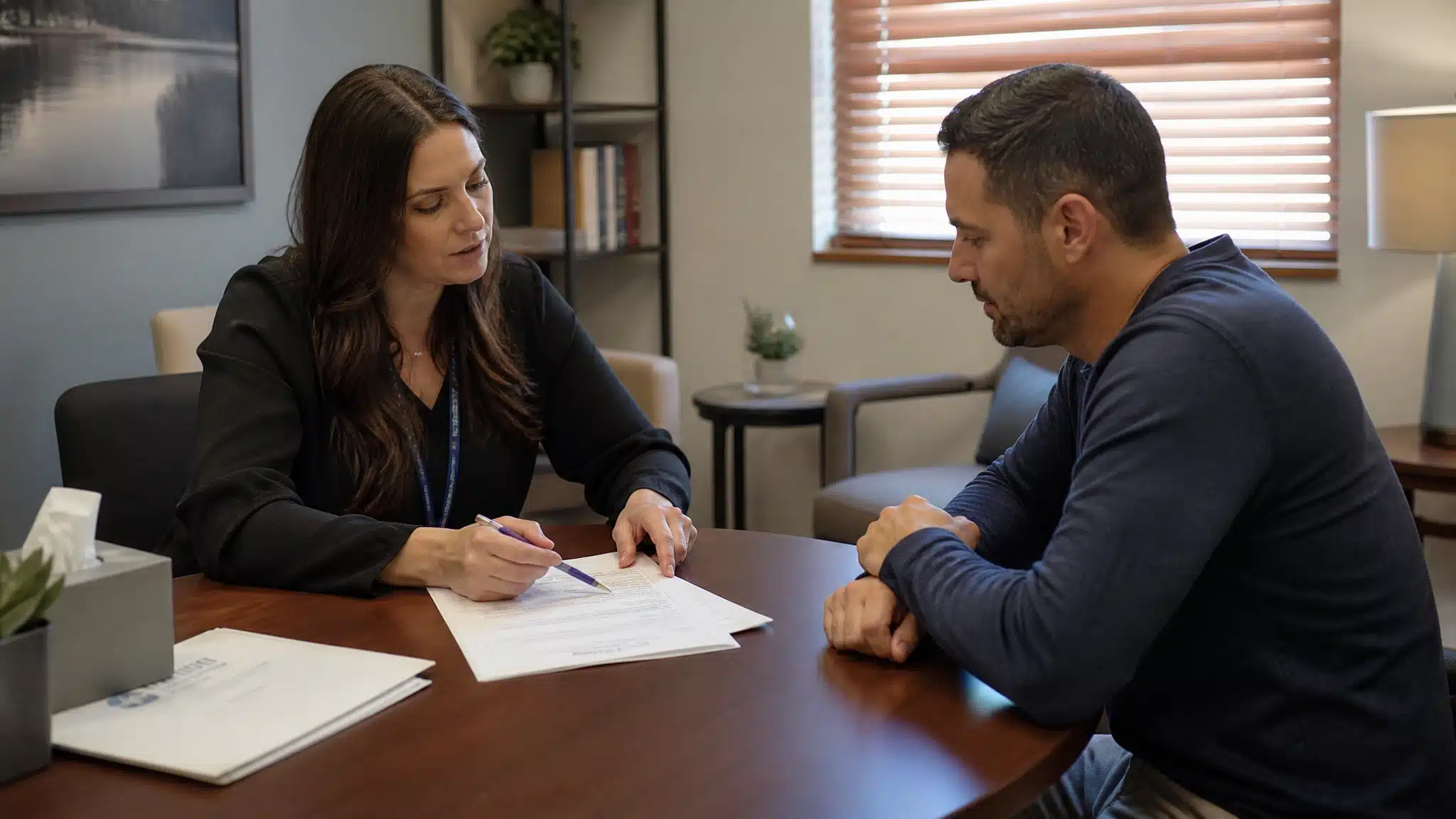
Your care team reviews your progress by reassessing your diagnosis, severity, withdrawal status, and mental health as you move through detox, therapy, and continuing care, confirming the plan still matches your needs. Because your treatment plan reflects your stability at a single point in time, your providers revisit it as your condition changes. They track your progress against measurable goals, noting improvements in coping skills, motivation, and relapse-prevention readiness.
When your stability improves, your care intensity steps down, for example, from residential to intensive outpatient care. If you struggle or relapse risk rises, they intensify support or adjust medications. Your movement through stages of change, such as action and maintenance, also guides these updates. This ongoing review keeps your care aligned with your current clinical status and recovery.
How Do Individual Therapy Group Therapy Medication Management and Case Management Serve Different Roles
Individual therapy, group therapy, medication management, and case management each serve a different role in your treatment. Individual therapy targets your personal patterns, triggers, and coping-skills development. Group therapy builds peer support, accountability, and shared learning. Medication management controls withdrawal symptoms, reduces cravings, and supports relapse prevention when clinically appropriate. Case management coordinates your medical, mental health, housing, and social supports across care transitions. Exploring addiction treatment center options can help individuals find care that fits their needs. Comparing available programs can make it easier to choose the right path for recovery.
| Service | Primary Role |
|---|---|
| Individual therapy | Addresses personal triggers and coping skills |
| Group therapy | Provides peer support and accountability |
| Medication management | Reduces cravings and withdrawal symptoms |
| Case management | Coordinates medical and social supports |
Together, these services work in parallel, not isolation. Each one strengthens the others, giving you comprehensive support that addresses both your immediate stabilization and long-term recovery needs.
How Does the Treatment Team Decide When to Step Care Up or Down
Your treatment team decides to intensify or ease your level of care based on assessment findings, measured stability, and your response to current treatment. When you show consistent progress, such as stable routines, reduced cravings, and effective coping skills, your care can step down, moving from residential to intensive outpatient or standard outpatient care. If you experience worsening symptoms, relapse, or heightened withdrawal or overdose risk, your team steps care up to a more structured or medically supervised setting.
These adjustments follow your treatment plan and ongoing reassessment, not a fixed timeline. Care transitions connect each level without interruption, so you don’t lose support during changes. This matched-intensity approach ensures you receive the appropriate level of care as your needs evolve.
What Happens During Discharge and Continuing-Care Planning
During discharge and continuing-care planning, your team builds a continuing-care plan that extends recovery support beyond discharge. This phase connects you to the next level of care, often intensive outpatient or standard outpatient services, so treatment continues without interruption. Your plan includes relapse-prevention strategies, trigger-avoidance techniques, and clear steps for managing high-risk situations. If medication-assisted treatment supports craving reduction or relapse prevention, your team coordinates ongoing prescriptions and monitoring.
Case management links you to medical care, mental health services, housing, and social supports. Your aftercare may add peer support, community resources, family involvement, and scheduled follow-up appointments. Because serious cases often benefit from long-term engagement, many models recommend staying involved for at least one year to stabilize gains and sustain your recovery.
Starting Rehab Can Feel Less Overwhelming With the Right Support
Beginning treatment can bring a lot of uncertainty, especially when you are not sure what happens after admission. Villa Wellness Center offers compassionate drug addiction treatment with care tailored to each stage of recovery. You can verify insurance coverage or call (844) 609-3035 to speak confidentially with the admissions team about what to expect next.
Frequently Asked Questions
How Much Does Drug Rehab Typically Cost?
The provided information doesn’t include specific cost data for drug rehab, so you won’t find pricing details here. What you can review instead covers the clinical stages of care, screening, detox, residential or outpatient treatment, therapy, medication-assisted treatment, and continuing care. Since costs typically vary by treatment level, duration, and setting, you’ll want to consult a specific provider or your insurance plan for accurate pricing tailored to your treatment needs.
Does Insurance Cover Drug Rehab Treatment?
Insurance coverage for drug rehab varies by your plan, provider, and diagnosed level of need. Your benefits may cover intake screening, assessment, detoxification, residential treatment, therapy, medication-assisted treatment, and continuing care when they’re clinically indicated. You’ll want to verify what’s included, since coverage often depends on medical necessity and your assessment findings. Check whether outpatient, intensive outpatient, or residential care is authorized, and confirm any limits on covered treatment duration.
Can I Use My Phone During Rehab?
Phone access depends on your program’s structure and level of care. Residential and structured treatment often limit phone use, especially early on, to reduce access to triggers and help you build stable routines. You’ll typically have designated times for calls as your stability improves. Outpatient programs generally allow more flexibility. Since policies vary, you should confirm the specific rules with your treatment facility before admission to set clear expectations.
What Should I Pack for Residential Treatment?
You’ll want to pack comfortable, weather-appropriate clothing, sleepwear, and closed-toe shoes for daily structured activities. Bring toiletries, prescribed medications with documentation, and a valid ID or insurance information. Include a few personal comfort items, like photos or a journal, to support your routine. Since residential treatment commonly lasts one to three months, pack enough essentials. Check your program’s guidelines first, since facilities often restrict certain items to reduce triggers and maintain safety.
Can Family Members Visit During Rehab?
Yes, family members can typically visit during residential treatment, though specific policies vary by program. Since family therapy is a core part of rehab, your treatment often includes structured family sessions alongside individual and group therapy. These visits support your recovery by strengthening social support and addressing relationship dynamics. You’ll want to confirm your program’s visitation schedule and rules during intake, as timing and frequency depend on your treatment plan and stability.