







Yes, a urine drug test can detect alcohol, but only when you specifically order it. Standard panels target opioids, benzodiazepines, cocaine, amphetamines, and THC, not alcohol. To catch alcohol, your provider must request either an ethanol assay or metabolite testing for EtG and EtS. Ethanol shows recent use within 10, 24 hours, while EtG and EtS extend detection to 72+ hours. Understanding what each test measures reveals why cutoffs and timing matter so much.
Key Takeaways
- A urine drug test can detect alcohol, but only if the correct alcohol assay is specifically ordered.
- Standard urine drug panels target opioids, benzodiazepines, cocaine, amphetamines, and THC, excluding alcohol by default.
- Testing measures either ethanol directly or its metabolites, ethyl glucuronide (EtG) and ethyl sulfate (EtS).
- Ethanol is detectable for about 10, 24 hours, while EtG and EtS extend detection to 24, 72+ hours.
- EtG and EtS indicate recent alcohol exposure, not impairment, with typical cutoffs of 250 ng/mL and 100 ng/mL.
Can a Urine Drug Test Detect Alcohol and What Is the Test Looking For
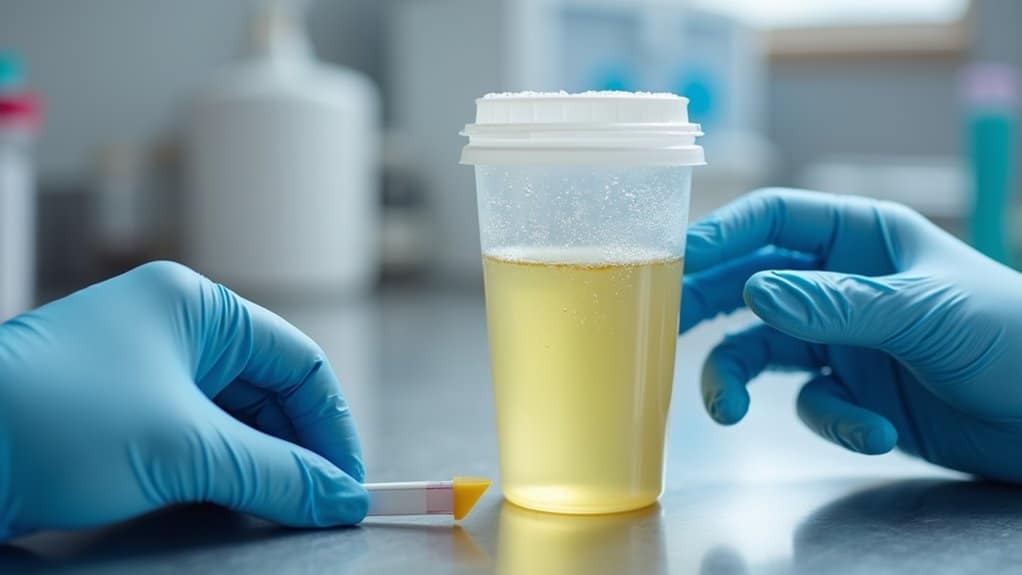
A urine drug test can detect alcohol, but only when the correct assay is ordered. Standard urine drug panels target opioids, benzodiazepines, cocaine, amphetamines, and THC, not alcohol, so you won’t get an alcohol result unless you specifically request it. What the test looks for depends on the method. Direct ethanol testing measures alcohol itself in urine, reflecting very recent consumption. Alternatively, metabolite assays measure EtG (ethyl glucuronide) and EtS (ethyl sulfate), two direct biomarkers your body produces after ethanol ingestion. Labs often measure EtG and EtS together to improve confidence in identifying recent alcohol exposure. Your test selection matters. Ethanol testing captures a short window, while EtG and EtS extend the look-back period considerably, detecting alcohol use even after ethanol clears. Drug test panel differences can significantly affect your results, so consulting a professional helps you choose the right test for your needs.
Does Alcohol Show Up on a Urine Drug Test as Ethanol or Alcohol Metabolites
Alcohol shows up on a urine drug test in two distinct forms: as ethanol itself or as its metabolites, EtG and EtS. Which form you detect depends entirely on the assay ordered. Ethanol testing measures the parent compound directly, reflecting very recent drinking. EtG (ethyl glucuronide) and EtS (ethyl sulfate) are direct metabolites, remaining detectable long after ethanol has cleared your system.
| Marker | What It Measures | Detection Window |
|---|---|---|
| Ethanol | Parent alcohol | 10, 24 hours |
| EtG | Ethyl glucuronide | 24, 72+ hours |
| EtS | Ethyl sulfate | 24, 72+ hours |
You’ll notice that metabolite testing extends your look-back window considerably. Labs often measure EtG and EtS together, improving confidence that a positive result reflects genuine ethanol ingestion rather than incidental exposure or analytical error.
Do Urine Drug Tests Test for Alcohol Automatically or Only When It Is Ordered
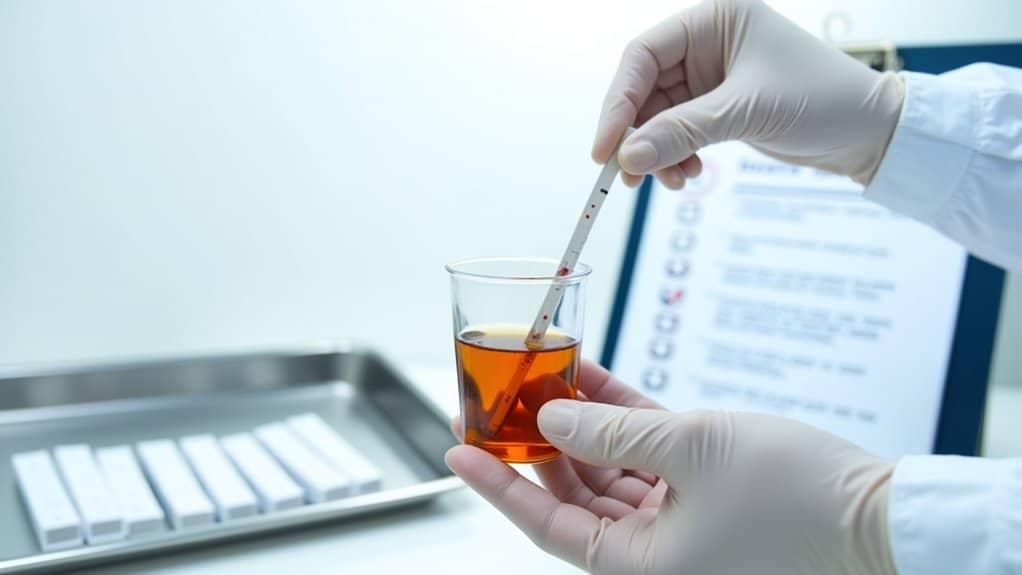
Standard urine drug screens don’t test for alcohol automatically. Conventional panels target opioids, benzodiazepines, cocaine, amphetamines, and THC, and alcohol isn’t included by default. If you need urine alcohol testing, someone must specifically request it through deliberate test ordering. Depending on what’s ordered, the lab either measures ethanol directly or quantifies its metabolites, EtG and EtS, using LC-MS/MS confirmation. Alcohol detection in drug tests matters because typical tests often overlook alcohol, leading to misunderstandings about someone’s sobriety.
This distinction matters because test selection determines your detection window. An ethanol assay reflects only very recent drinking, roughly 12, 24 hours, while EtG/EtS testing extends that window to 24, 72 hours or longer. So if you assume a routine drug screen captures alcohol use, you’re mistaken. Without explicit ordering of an ethanol or EtG/EtS assay, alcohol simply won’t register on your results. The alcohol detection window varies significantly between different testing methods. Understanding this timeline is crucial for anyone concerned about the implications of alcohol use on test outcomes.
What Is EtG and What Does It Indicate About Alcohol Exposure
Ethyl glucuronide (EtG) is a minor direct metabolite of ethanol that serves as a biomarker of recent alcohol exposure. Unlike ethanol itself, which clears quickly, EtG remains detectable after alcohol has left your system, extending the detection window to roughly 24, 72 hours and, with heavy use, up to about 80 hours or even 5 days. That makes ethyl glucuronide the most commonly used urine marker for alcohol monitoring in abstinence and relapse settings. A positive EtG result indicates you’ve consumed alcohol recently, but it doesn’t prove impairment at collection or quantify how much you drank. Because excretion varies from person to person, you should interpret EtG results alongside the lab’s cutoff, your drinking timing, and relevant clinical context.
What Is EtS and Why Can It Be Interpreted Alongside EtG
Ethyl sulfate (EtS) is a direct metabolite of ethanol, formed through sulfate conjugation rather than the glucuronidation pathway that produces EtG, and it can be interpreted alongside EtG because it originates from a distinct metabolic route that provides an independent confirmation of recent ethanol exposure. When you pair EtS with EtG, you strengthen the reliability of alcohol testing, since a single marker can occasionally give ambiguous results. Studies in liver disease patients reported EtS sensitivity of 82% and specificity of 86%, complementing EtG’s 76% sensitivity and 93% specificity. Labs often flag positivity when EtS reaches 100 ng/mL, alongside EtG at 250 ng/mL. Measuring both metabolites together helps you rule out incidental exposure and specimen-handling artifacts, giving you greater confidence that a positive result reflects genuine, recent alcohol consumption rather than contamination.
How Can Test Cutoffs and Incidental Alcohol Exposure Affect Interpretation
Test cutoffs and incidental alcohol exposure affect interpretation because positivity thresholds and environmental sources can push results across the line regardless of actual drinking. Cutoff interpretation plays a central role. Labs often report positivity when EtG reaches 250 ng/mL and EtS reaches 100 ng/mL, but excretion varies widely between individuals based on dose, timing, metabolism, and hydration. You might test positive near a threshold while someone else clears below it. Low-level positives complicate matters, since incidental alcohol exposure, from hand sanitizers, mouthwash, certain foods, or fermented products, can raise EtG and EtS enough to cross lower cutoffs. That’s why higher thresholds reduce false positives from environmental sources. When you interpret a result, consider the cutoff used, the timing of collection, and clinical history. Combining EtG with EtS improves confidence that a positive reflects actual ingestion rather than incidental contamination.
Why Can a Urine Alcohol Test Not Tell You Exactly How Much or Exactly When Someone Drank
A urine alcohol test can’t pinpoint exactly how much or when someone drank because it measures excreted ethanol or its metabolites, not blood concentration at a fixed moment. By the time you collect a sample, ethanol may have cleared while EtG and EtS persist, so a positive result reflects prior exposure across a variable detection window rather than a precise dose or timestamp.
- EtG and EtS excretion varies widely between individuals, obscuring the relationship between concentration and amount consumed.
- The detection window shifts with dose, metabolism, hydration, and lab cutoffs.
- Metabolite levels don’t correlate linearly with blood alcohol concentration.
- A single measurement can’t distinguish recent light drinking from earlier heavy drinking.
You’re seeing evidence of consumption, not a quantitative reconstruction.
When Urine Alcohol Testing Points to a Bigger Concern
A urine alcohol test can show recent exposure, but it cannot explain why drinking may be becoming harder to manage. Villa Wellness Center offers individualized support through its drug addiction treatment program. If alcohol use is affecting your daily life, verify your insurance coverage or call (844) 609-3035 to speak with the admissions team about treatment options.
Frequently Asked Questions
Can Hand Sanitizer or Mouthwash Cause a Positive Etg Result?
Yes, they can. If you use alcohol-containing hand sanitizer heavily or swish alcohol-based mouthwash, you might absorb enough ethanol to trigger a positive EtG result, especially near lower cutoffs. This is called incidental exposure. That’s why interpretation matters: your test’s threshold, timing, and clinical history all factor in. To reduce risk, you’ll want to avoid alcohol-based products before testing and disclose any use to your clinician for accurate assessment.
How Much Does a Urine Alcohol Test Typically Cost?
The cost of a urine alcohol test varies depending on the type of screening, the laboratory, and whether confirmatory testing is required. A basic urine ethanol test is generally less expensive than EtG or EtS testing, especially when advanced confirmation methods are used. Insurance coverage may also affect your out-of-pocket cost. For exact pricing, contact the testing laboratory or healthcare provider directly.
Can You Refuse or Dispute a Urine Alcohol Test Result?
You can dispute a result, though you can’t always refuse testing without consequences, especially in employment, legal, or monitoring contexts. If you challenge a positive, you’d request confirmatory LC-MS/MS analysis, which quantifies EtG at or above 250 ng/mL and EtS at or above 100 ng/mL. You can also raise timing, cutoff thresholds, incidental exposure, and specimen-handling issues. Remember, positive EtG or EtS indicates recent use, not impairment at collection.
Do Employers Commonly Use Etg Testing for Workplace Screening?
You’ll find EtG testing isn’t part of standard workplace drug panels, since those typically screen for opioids, benzodiazepines, cocaine, amphetamines, and THC, not alcohol. Employers usually order EtG separately, most often in safety-sensitive roles or abstinence-monitoring programs where recent drinking matters. Because EtG detects use for 24, 72 hours (sometimes up to 5 days), it’s better suited for confirming abstinence than proving impairment. Interpret positives cautiously, considering cutoffs and timing.
Can Medications or Medical Conditions Affect Urine Alcohol Test Accuracy?
Yes, medications and medical conditions can affect your urine alcohol test accuracy. Alcohol-containing products, like cough syrups, mouthwash, or hand sanitizers, may trigger positive EtG or EtS results through incidental exposure. Your metabolism, hydration, and kidney function also influence excretion and detection windows. Additionally, urinary tract infections can produce fermentation, potentially altering ethanol readings. Because of this person-to-person variability, you’ll want to interpret results alongside cutoff levels, timing, and clinical history.