







Drug testing and alcohol testing aren’t the same because they answer different questions. Drug testing screens substance-specific panels, cannabis, cocaine, opioids, confirming prior exposure through urine, hair, or saliva. Alcohol testing targets one intoxicant, ethanol, and often measures your current impairment via breath or blood. Detection windows differ too: drug metabolites linger for days or months, while breath testing reflects your present BAC. Understanding these distinctions, and which test fits your situation, matters more than you’d expect.
Key Takeaways
- Drug testing screens for multiple substance-specific panels, while alcohol testing targets a single intoxicant, ethanol.
- Drug testing confirms prior exposure or past use, whereas alcohol testing measures present impairment and current BAC.
- Detection windows differ: urine drug tests span 1, 3 days and hair 7, 100+ days, while breath alcohol reflects only current impairment.
- Specimen types vary, with drug tests using urine, hair, saliva, or sweat, and alcohol tests favoring breath or blood.
- Most standard drug panels exclude ethanol by default, adding alcohol only to meet specific policy or DOT requirements.
Why Are Drug Testing and Alcohol Testing Not Always the Same Test
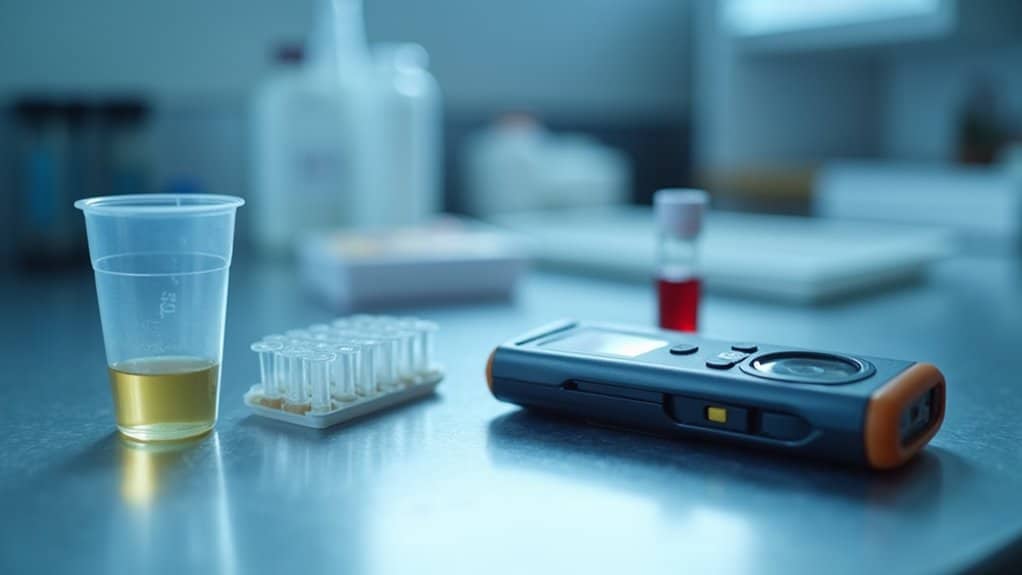
Drug testing and alcohol testing are not always the same test because they are built to answer entirely different questions. You’re dealing with two distinct tools. Drug testing screens for substance-specific panels, cannabis, cocaine, amphetamines, opioids, benzodiazepines, using urine, hair, saliva, or sweat. Alcohol testing targets a single intoxicant, ethanol, typically through breath, blood, or urine. Workplace alcohol testing is crucial for maintaining a safe and productive environment. Many companies implement regular testing to prevent potential hazards related to alcohol consumption.
Their detection windows diverge sharply. Urine drug testing detects use over roughly 1 to 3 days, and hair extends the lookback to 7 to 100+ days. Breath alcohol testing, by contrast, reflects current blood alcohol concentration, not past use.
That distinction matters. Drug testing usually confirms prior exposure, whereas alcohol testing measures present impairment. When you conflate them, you risk misreading results and applying the wrong regulatory standard.
What Is an Alcohol Panel Test and What Can It Measure
An alcohol panel test measures ethanol or its markers to assess recent consumption and current impairment. Alcohol testing focuses on a single intoxicant, unlike substance-specific drug panels. You can choose from several specimen types, breath, blood, urine, saliva, or sweat, each suited to different objectives. Breath testing estimates blood alcohol concentration from alveolar air, giving you a rapid, minimally intrusive measure of present impairment. Blood testing measures ethanol directly and is widely treated as highly accurate. Detection windows differ by method: breath and blood reflect current BAC, while urine detects alcohol or its metabolites for a short period, offering less direct evidence of immediate impairment. You’ll interpret results against regulatory thresholds, such as 0.08 for driving or 0.04 in Department of Transportation contexts.
Is There a Drug Test for Alcohol and When Does a Drug Test Include Alcohol
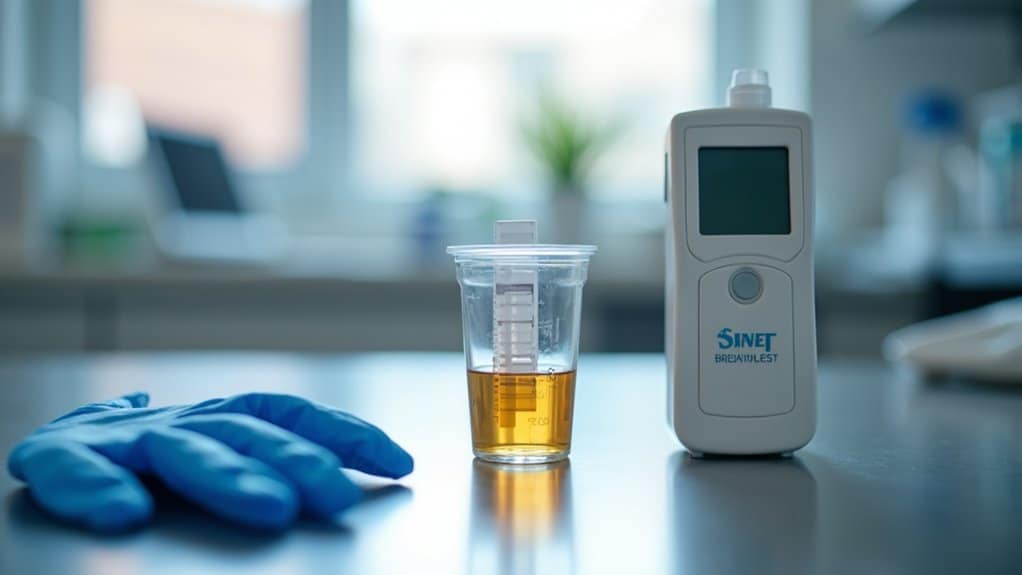
A standard drug test screens for alcohol only when the panel is configured to include it. Most substance-specific panels target cannabis, cocaine, amphetamines, opioids, and benzodiazepines, not ethanol. So a typical urine drug testing screen won’t flag alcohol unless your employer or regulator specifically adds it. When alcohol’s included, it’s usually measured separately, since its detection windows and interpretation differ sharply from other substances. Alcohol detection in urine tests can reveal recent consumption, helping individuals in safety-sensitive jobs make informed decisions before a screening.
If the goal’s assessing current impairment, breath alcohol testing handles that job, estimating your blood alcohol concentration from alveolar air. Urine can detect alcohol or its metabolites briefly, but it’s less direct for immediate impairment. So a drug test includes alcohol only when the panel’s expanded intentionally, typically to meet policy or DOT requirements. 5-panel testing and alcohol are often linked in employment policies. Employers strive to ensure that their workforce remains safe and productive by including alcohol screenings in their testing protocols.
How Do Breath, Urine EtG and EtS, Blood Ethanol, and PEth Tests Differ
Breath, urine EtG and EtS, blood ethanol, and PEth tests differ in what they actually measure. Breath alcohol testing estimates your current blood alcohol concentration from alveolar air, reflecting present impairment rather than past use. Blood ethanol measurement quantifies ethanol directly, giving the strongest indicator of your current alcohol level. Urine EtG/EtS detection identifies non-oxidative metabolites, so it extends the lookback beyond the point when ethanol itself clears. PEth detects a phospholipid marker in blood, indicating sustained or heavier drinking over roughly weeks.
| Test | What It Reflects |
|---|---|
| Breath / Blood Ethanol | Current impairment, active BAC |
| Urine EtG/EtS | Recent past use, no impairment |
| PEth | Longer-term drinking pattern |
You’ll pick each method based on the question you’re answering.
Why Can Different Alcohol Tests Answer Different Questions About Alcohol Exposure
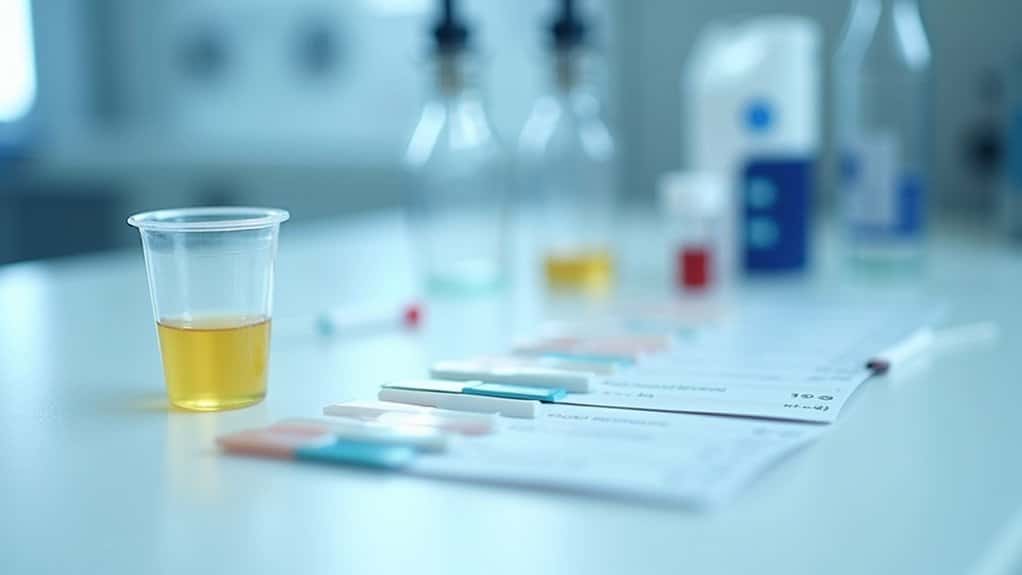
Different alcohol tests answer different questions because each one targets a distinct marker with its own detection window and clinical meaning. When you use breath testing, you’re estimating blood alcohol concentration from alveolar air, so you’re measuring current impairment and recent consumption. That makes breath results ideal for impairment interpretation and regulatory thresholds like 0.08 for driving or 0.04 in Department of Transportation contexts.
If you need past exposure instead, you’ll turn to different specimens with longer detection windows. Urine EtG and EtS confirm recent drinking after ethanol clears, while PEth reflects heavier or sustained use over weeks. Because these markers persist beyond impairment, they answer questions about prior exposure, not current intoxication. So you’ll match the test to the question you’re asking.
How Does the Testing Purpose Affect Which Alcohol Method Is Selected
Your testing purpose drives method selection because each goal, confirming current impairment, verifying abstinence, or documenting sustained use, demands a marker with the right detection window. When you need impairment measurement at the moment of testing, you’ll choose breath alcohol testing, which estimates BAC from alveolar air and reflects recent drinking and current intoxication. If you’re pursuing legal certainty, you’ll rely on blood testing, which measures ethanol directly and supports thresholds like 0.08 or the 0.04 DOT limit. When abstinence monitoring is the goal, you’ll select urine testing, since its detection window captures metabolites for a short period after consumption. Matching the specimen’s detection window to your specific question ensures your results actually answer what you’re asking about behavior, timing, and risk.
What Information Should Be Confirmed Before Interpreting a Drug or Alcohol Test Result
Confirm the test target, specimen type, detection window, and cutoff levels before interpreting any drug or alcohol result. A drug panel and an alcohol test answer fundamentally different questions, so start by confirming what the test was designed to detect. You can’t interpret a result correctly until you verify the specimen type, since urine, hair, saliva, breath, and blood each carry distinct detection windows and reliability. You also need to distinguish impairment vs exposure, because a positive drug result often reflects prior use rather than current functional impairment.
- Test target: Confirm whether you’re screening for specific substances or ethanol.
- Specimen type: Verify urine, hair, saliva, breath, or blood.
- Detection windows: Match the lookback period to the question you’re answering.
- Cutoff levels: Check thresholds and regulatory limits, such as 0.08 or 0.04 BAC.
When Alcohol or Drug Use Starts Raising Bigger Questions
Drug and alcohol testing can reveal exposure, but it cannot address the reasons substance use may be affecting your life. Villa Wellness Center provides individualized care through its drug addiction treatment program. If you are considering support, verify your insurance coverage or call (844) 609-3035 to discuss treatment options with the admissions team.
Frequently Asked Questions
Can Prescription Medications Cause a Positive Drug Test Result?
Yes, prescription medications can trigger a positive drug test result. If you’re taking opioids, benzodiazepines, or amphetamine-based medications, you’ll likely test positive on standard panels because these tests detect specific substances and metabolites, not their legality. Remember, a positive result confirms exposure, not impairment or misuse. You should disclose your prescriptions to the medical review officer, who’ll verify legitimate use and can reclassify your result accordingly during interpretation.
How Much Do Drug and Alcohol Tests Typically Cost?
You’ll find costs vary by test type and specimen. Breath alcohol tests typically run cheapest, often just a few dollars per screening. Urine drug panels usually cost more, depending on how many substances you’re screening. Hair testing tends to be pricier because it extends the detection window considerably. Blood alcohol testing costs more than breath since it’s lab-processed. You should confirm exact pricing with your provider, since panel complexity drives your final cost.
Can Secondhand Marijuana Smoke Trigger a Positive Drug Test?
It’s highly unlikely under normal conditions. You’d need extreme, prolonged exposure in an unventilated space to approach standard urine cutoff levels, and even then, results typically stay below detection thresholds. Federal workplace panels set cutoffs specifically to rule out passive exposure. So if you’re in a well-ventilated setting or casual proximity, you won’t test positive. Remember, a positive result reflects metabolite concentration exceeding a defined cutoff, not simply any exposure.
Are Home Drug and Alcohol Testing Kits Reliable?
Home kits can be reliable for initial screening, but you shouldn’t treat them as definitive. Breath alcohol testers estimate your current BAC quickly, while home drug tests detect prior exposure, not impairment. Results depend on the substance, cutoff level, and specimen type, so false positives and negatives happen. You’ll want lab confirmation for any positive result. For legal or workplace decisions, don’t rely on home testing; use certified, confirmatory methods instead.
Can You Refuse a Workplace Drug or Alcohol Test?
You can refuse a workplace drug or alcohol test, but you’ll likely face consequences. Refusal often gets treated as a positive result under many employer policies and regulatory frameworks, including Department of Transportation rules. You could face disciplinary action, termination, or loss of certification. Before you decline, review your employer’s written policy and any applicable regulations, since they define what counts as refusal and what penalties you’ll trigger.