







Online drug and alcohol counseling connects you with licensed therapists through video, phone, text, and secure platforms, wherever you are. You’ll access evidence-based methods like cognitive behavioral therapy from home, reducing anxiety and travel barriers. Research supports its strength: a Yale study found 67% of web-based participants no longer met diagnostic criteria, versus 43% in standard counseling. Whether distance, disability, or daily demands limit you, remote care works. Here’s how it can help you.
Key Takeaways
- Online counseling connects you with licensed therapists through video, phone, text, and secure platforms from anywhere, including rural areas.
- Remote care removes location, transportation, mobility, and childcare barriers that often prevent people from accessing in-person addiction treatment.
- Encrypted connections and anonymity features protect privacy, reducing stigma-related hesitation while keeping care in a familiar home environment.
- Flexible scheduling around work and family, plus lower sliding-scale costs, make virtual counseling more accessible than traditional office visits.
- A Yale study found 67% of web-based participants no longer met diagnostic criteria versus 43% in standard counseling, with 32% higher completion rates.
What is online drug and alcohol counseling


Online drug and alcohol counseling delivers professional addiction treatment through digital tools you already use, such as your phone, computer, or tablet. Instead of traveling to a clinic, you connect with licensed therapists through video, phone, text, and secure online platforms. This means drug and alcohol counseling online can reach you wherever you are, whether you’re in a rural area, managing a disability, or simply trying to fit treatment around work and family.
Online addiction counseling uses the same evidence-based methods you’d find in person, including cognitive behavioral therapy, individual sessions, and group support. If you’re not sure where to start, SAMHSA’s national helpline at 1-800-662-HELP (4357) can point you toward remote care. You get real support, delivered on your terms.
How does a virtual session actually run
A virtual session runs through the device and platform that work best for you, whether that’s a video call on your computer, a phone session, or a secure messaging thread. Online drug counseling uses smartphones, computers, and tablets you already own, so there’s nothing new to buy. Your therapist meets you from your own home, which can lower anxiety and make it easier to discuss sensitive issues.
A typical session mirrors in-person care. You talk through triggers, cravings, and progress, and your counselor may guide you through cognitive behavioral therapy exercises. Some programs add immediate or 24-hour support for moments when relapse risk spikes. Because drug counseling online runs on secure platforms, your confidentiality stays protected throughout every conversation you have.
What technology and privacy protections are involved
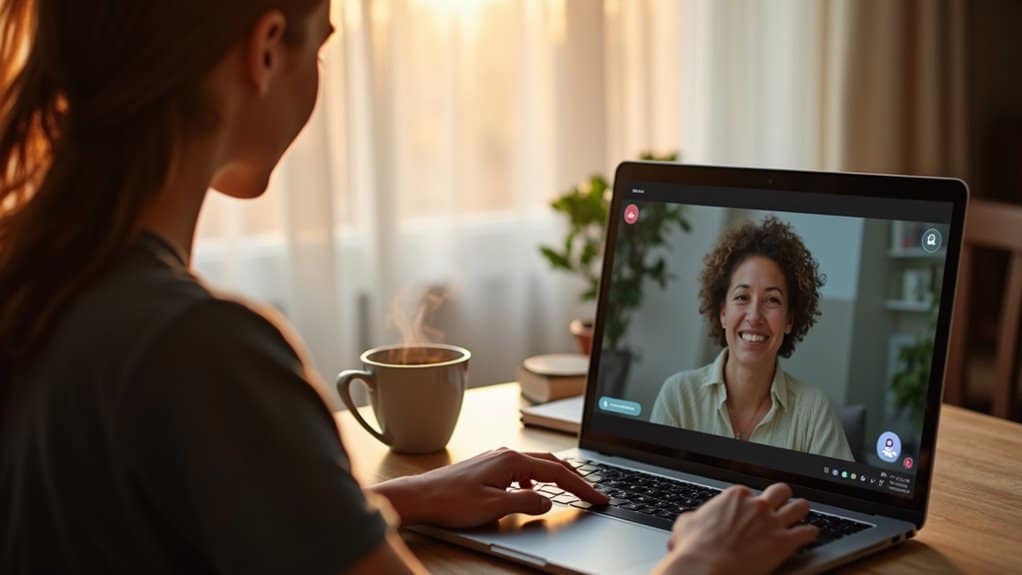
Secure digital platforms protect your confidentiality during every counseling session through encryption, multiple access points, and anonymity features. You connect through devices you already use every day, and those same tools carry safeguards designed to keep your information private and your sessions protected.
- Encrypted connections shield your video, audio, and text exchanges from unauthorized access.
- Multiple access points, phone, video, text, and online platforms, let you choose the option that feels safest.
- Anonymity features in group counseling let you join without full identification, easing stigma-related hesitation.
- Home-based sessions keep your care within a familiar, private environment that reduces anxiety.
- Confidential helplines, like SAMHSA’s 1-800-662-HELP (4357), reinforce secure remote support.
Together, these protections help you focus on healing, knowing your privacy stays intact throughout treatment.
How does virtual care compare to traditional access
Virtual care often measures up favorably against traditional, in-person access by removing the barriers that keep you from starting or finishing treatment.
| Factor | Traditional Access | Virtual Care |
|---|---|---|
| Location | Limited by geography | Reaches rural, underserved areas |
| Scheduling | Fixed office hours | Flexible around work, family |
| Cost | Commuting, time off | Lower, sliding-scale options |
The evidence supports this shift. A Yale study found 67% of web-based participants no longer met diagnostic criteria, compared with 43% in standard counseling. Research also shows a 32% higher likelihood of completion online. You get comparable outcomes with fewer obstacles, making consistent, effective recovery genuinely within reach.
Who is online addiction counseling best suited for

Online addiction counseling best suits people who face real obstacles to in-person care. If distance, disability, or daily demands keep you from a clinic, remote treatment can meet you where you are. It’s especially effective when privacy concerns or stigma make you hesitate to seek help. Online addiction counseling provides a flexible alternative that can fit into even the busiest schedules. Many individuals find that the comfort of their own home allows them to engage more openly in their recovery journey.
You may benefit most if you identify with any of the following:
- You live in a rural or underserved area with few specialized therapists nearby.
- You manage transportation, mobility, or childcare barriers that complicate travel.
- You need flexible scheduling around work and family responsibilities.
- You feel more comfortable discussing sensitive issues from home.
- You want lower-cost care with sliding-scale options.
For consistent, evidence-based support, remote counseling can sustain your recovery reliably.
What makes online drug and alcohol counseling worth choosing
Online drug and alcohol counseling is worth choosing because the evidence for its effectiveness is compelling. In a Yale study, 67% of participants in a web-based program no longer met diagnostic criteria at treatment end, compared with 43% in standard counseling and 52% in one-on-one therapy. You’re also more likely to finish what you start. Research reported a 32% higher likelihood of treatment completion versus face-to-face sessions, and computer-guided CBT showed the lowest dropout rate in one study. Outcomes hold up, too. Online CBT produces results similar to in-person care, with Harvard Health reporting 75% of days abstinent for the CBT4CBT group. Factoring in accessibility, flexibility, privacy, and 24-hour support, choosing online counseling makes practical, evidence-based sense.
What equipment and internet setup do you need
You need a device you likely already use every day, so you can begin treatment without added financial strain. Telehealth is designed to work with common devices, which means digital platforms support access through phone, video, text, and online tools, so you can choose the entry point that feels most comfortable for you.
To connect with a counselor, you’ll typically need:
- A smartphone, computer, or tablet with a working camera and microphone
- A stable internet connection capable of supporting video sessions
- Headphones or earbuds to protect your privacy and improve sound clarity
- A secure, private space where you can speak openly without interruption
- Access to a secure platform your provider uses to safeguard confidentiality
What virtual counseling does Villa Wellness Center deliver
Villa Wellness Center delivers virtual counseling designed around accessibility, flexibility, and evidence-based treatment. You can connect through phone, video, text, and secure online platforms, removing geographic barriers and reaching you even when transportation, disability, or childcare limits make in-person visits difficult.
You’ll receive online cognitive behavioral therapy, which research shows produces outcomes similar to in-person CBT for substance-use recovery. You can join individual sessions or remote group counseling, scheduled around your work and family responsibilities to support the consistency that ongoing recovery requires.
You’ll also have access to immediate support for cravings, withdrawal distress, and relapse risk outside normal office hours. If you need help now, call SAMHSA’s helpline at 1-800-662-HELP (4357).
Get Flexible Addiction Support From Wherever You Are
Choosing between weekly therapy and a more structured program can feel difficult, but you do not have to decide alone. Villa Wellness Center helps clients find care based on their symptoms, safety, and daily functioning through individual therapy and other mental health treatment options. You can verify your insurance or call our team (844) 609-3035 for confidential guidance about available care.
Frequently Asked Questions
Does Insurance Typically Cover Online Drug and Alcohol Counseling?
Coverage varies by your specific plan and provider, so you’ll want to verify your benefits directly. It’s worth noting that when coverage is limited, some telehealth providers offer sliding-scale fees or payment plans. You can also call SAMHSA’s national helpline at 1-800-662-HELP (4357) for guidance. Checking your options early helps reduce financial barriers and keeps your recovery accessible and affordable.
Can Online Counseling Include Prescriptions for Medication-Assisted Treatment?
What you can rely on is that telehealth broadens access through phone, video, text, and online platforms. If you’re seeking medication-assisted options, reach out to a licensed provider directly or call SAMHSA’s national helpline at 1-800-662-HELP (4357). They’ll help you understand what’s available and appropriate for your recovery needs.
What Happens During an Online Counseling Emergency or Crisis?
During a crisis, you can reach immediate help through remote support pathways. If you’re facing intense cravings, withdrawal distress, or thoughts of harm, 24-hour online support can help you address these risks outside normal office hours. You can also call SAMHSA’s national helpline at 1-800-662-HELP (4357) for mental health and substance-use concerns. These resources connect you with care right away, so you’re never left managing a dangerous moment alone.
Are Online Counseling Credentials and Licenses Verifiable Before Starting?
Yes, you can verify a counselor’s credentials before your first session. You’re entitled to ask for their license number, credentials, and the state where they’re licensed, then confirm those details through your state licensing board’s online database. Reputable telehealth platforms typically list provider qualifications upfront. If you can’t easily verify someone’s licensure, that’s a meaningful concern, and you deserve a provider whose credentials you can confidently confirm before starting care.
Can Family Members Participate in Virtual Addiction Counseling Sessions?
Yes, family members can join your virtual addiction counseling sessions. Remote formats make this especially accessible, loved ones can participate from their own devices, reducing travel and scheduling barriers. Group counseling may also feel easier to join remotely if someone’s uncomfortable appearing in person. Involving family can strengthen your support network, which supports consistency in recovery. Just confirm with your therapist how they structure family involvement and protect everyone’s confidentiality during shared sessions.